

 English
 русский
 Español
 عربى
Industry News
Home / News / Industry News / Fully Automatic Double-Head Pipe Bending Machine: A Practical Buyer's Guide

A fully automatic double-head pipe bending machine tends to change a shop floor quietly rather than dramatically. Instead of an operator feeding one bend at a time into a single head, two bending heads work on the same tube — sometimes within the same cycle — while the machine handles feeding, rotation and positioning on its own. For anyone producing repeatable tube assemblies in volume, the real gain is not a number on a spec sheet. It is the steady rhythm the machine brings to throughput, scrap rate and staffing.
What follows is a practical look at how these machines are built, what the specifications actually mean in day-to-day production, and what is worth checking before you settle on a configuration.
Content
The phrase is used loosely in the trade. On a hydraulic double-head bender, the two heads may move together, but the operator still loads the tube, pushes it against a stop and triggers each bend. A genuinely automatic machine closes that loop. Servo-driven feed and rotation axes index the tube between bends, the heads are programmed for angle and springback compensation, and a stored recipe reproduces the whole sequence at the press of a button.
In practice, three capabilities separate automatic from semi-automatic equipment:
When all three are present, the same machine can run a single part number all shift or move between a family of similar parts without an experienced hand re-dialling every axis. That flexibility is often worth more than headline cycle time, especially in plants running mixed batches.
If tube bending is still new to your team, our plain-language guide on how a tube bending machine works covers the fundamentals of tooling, clamping and bend geometry before you start comparing models.
Two heads on one bed sound simple, but the way they relate to each other defines what the machine can produce. That relationship is worth pinning down early, because it is much harder to change later than a control option or a tooling set.
Not every double-head design bends both ends at once. Some machines mirror the heads to produce symmetrical parts in a single cycle — handlebars, seat frames, simple U-shapes, symmetrical fluid lines. Others keep the heads independent, so the left and right bends can differ in angle and in bending plane. Both are legitimately "double-head", but they solve different problems.
The practical limit on many parts is geometry rather than tonnage. The second bend may try to pass through the first, or the tube may foul the head body mid-cycle. Builders work around this with head spacing, adjustable bend-arm lengths and careful sequencing of the bend order. If your part has tight centre-to-centre distances, raise it early in the conversation — a ten-minute review of the drawing can save months of workarounds.
Two bends on one tube mean two chances for error to stack up. Servo control, a rigid frame and repeatable clamping keep the distance between bends stable — which is precisely the dimension that locates the part in the vehicle or the assembly. Consistency here is what separates a machine that looks good in a demonstration from one that holds tolerance in week forty.
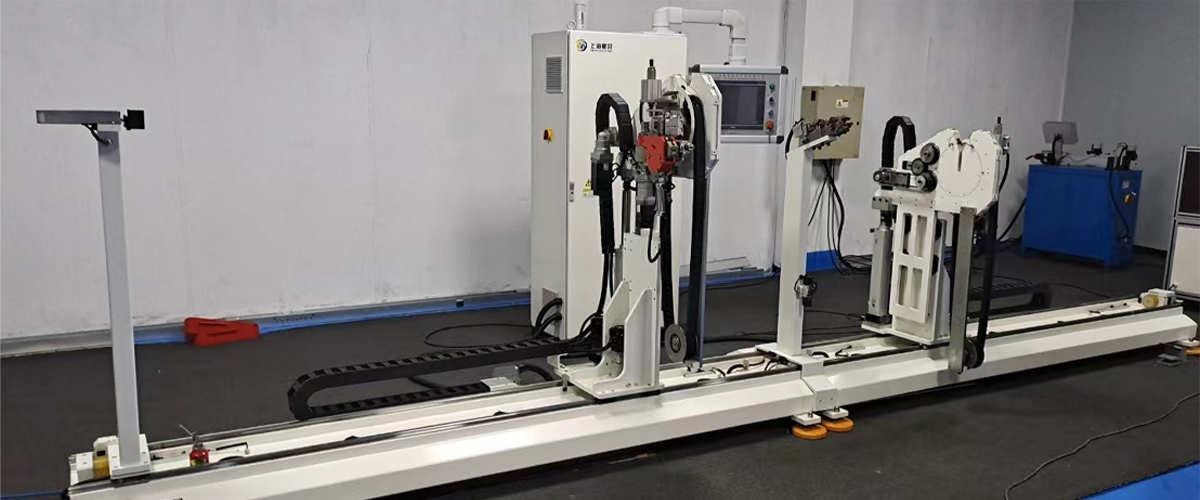
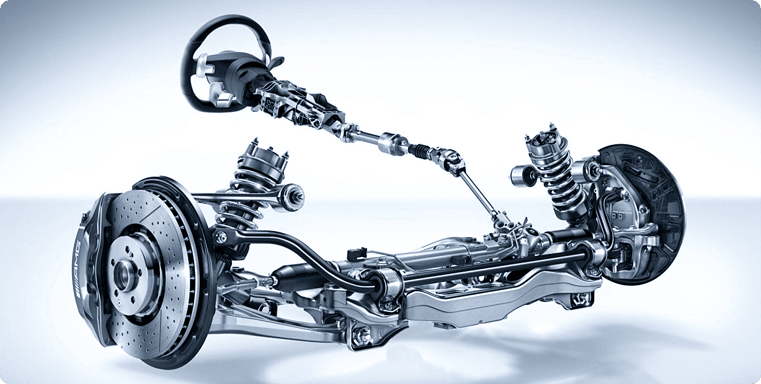 Fully Automatic Double-Head Pipe Bending MachineBuilt for unattended, high-volume production of tubes in the 1,000–5,000 mm length range, this fully automatic CNC dual-head pipe bender handles the complete processin...View Product →
Our own fully automatic double-head machine was developed around exactly this question: how to keep two bends consistent while the operator simply supervises.
Model numbers vary from builder to builder, but the underlying comparison usually comes down to three classes of machine. The table below is a simplified way to place a candidate machine before you look at its detailed data sheet.
| What you are comparing | Hydraulic double-head | CNC double-head | Fully automatic double-head |
|---|---|---|---|
| Bend angle setting | Manual stops or dials | Programmed per axis | Programmed with compensation |
| Tube feed and rotation | Handled by the operator | Partly powered | Servo-indexed, closed loop |
| Changeover | Long, tooling dependent | Several minutes | Recipe recall, typically minutes or less |
| Operator role | Loads and triggers each bend | Loads and confirms the cycle | Supervises and replenishes stock |
| Best fit | Low volume, simple parts | Mixed batches | Repeatable, higher-volume assemblies |
Beyond that, four numbers decide whether a machine suits your parts: maximum tube diameter, wall thickness for the material you actually run, the smallest centre-line radius available with your tooling, and the usable distance between the two heads.
Double-head bending is at its best where a part has two bends that must agree with each other — typically small-diameter tubing in automotive work. Brake lines, fuel and vapour lines, air-conditioning lines, seat frames and handrails all fall into that category, and all of them punish inconsistency later in assembly.
Brake pipe production is a good example of how demanding the application can be. Diameters are small, radii are tight, and every line has to mate cleanly with its fittings after flaring. A machine that holds cut length and bend position keeps the whole downstream operation honest.
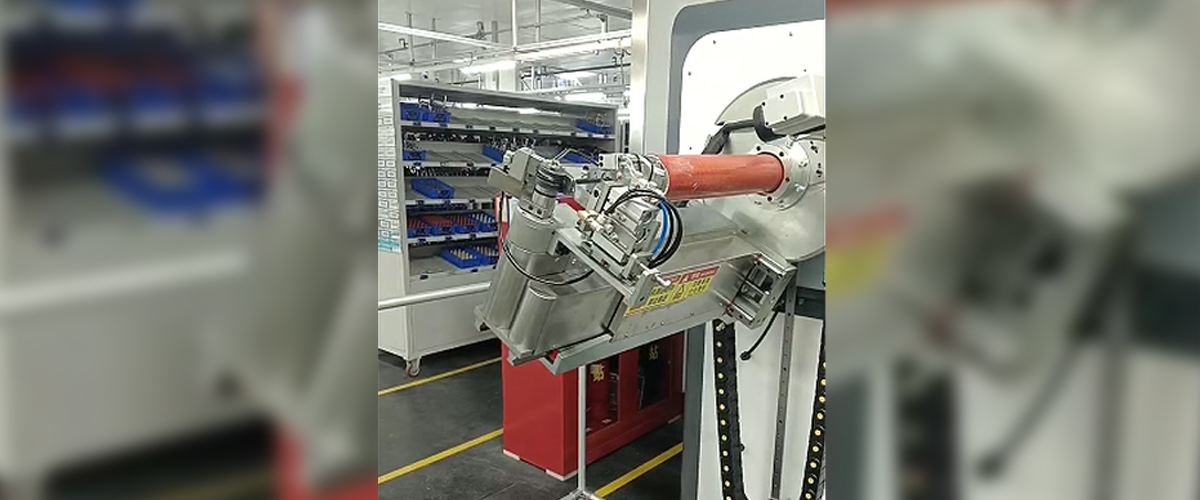
Double-Head Pipe Bender For Brake PipesDual-Station Synchronization: Breaking Through Productivity Bottlenecks Brake pipes are typically long, slender tubes — such as automotive brake lines. Conventional si...View Product →
That is the reasoning behind our brake-pipe double-head bender: two controlled bends, repeatable positioning, and a cycle that does not depend on how tired the operator is at the end of a shift.
Automotive air-conditioning pipe is another natural home for this class of equipment. Lines are long, routing is complex, and the bend sequence has to respect both the clearance under the hood and the fittings at each end. Where volumes justify it, the bender becomes one station in a line rather than a standalone machine.
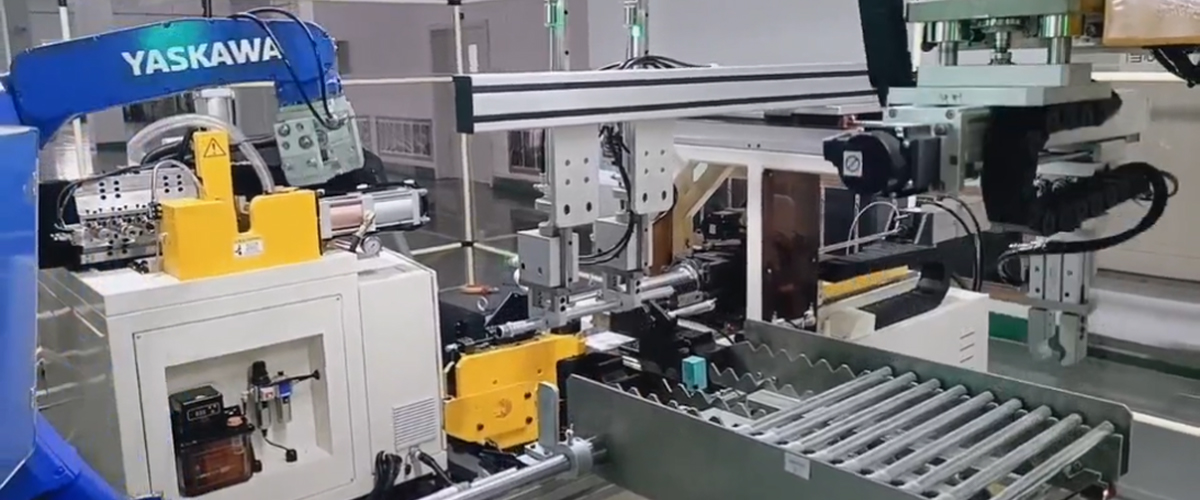
Automatic Air-Conditioning Pipe Forming LineIntegrated line combines loading, end forming, bending and unloading with robotic transfer and recipe-based changeover for varied tube parts.View Product →
That is the direction our automatic air-conditioning pipe forming line takes, and it reflects a broader point: a bender rarely lives alone. It sits between cutting, end forming, flaring, crimping and leak testing. When those stations are specified together, part handling between them — not bending itself — usually turns out to be the biggest hidden cost.
Bend dies, wiper dies, mandrels and collets wear, and their condition shows up in the part long before it shows up on the control screen. Ask any builder how tooling is changed, how it is shimmed or adjusted, and how wear is monitored. A machine with excellent axes and awkward tooling access will cost you more in lost minutes than you gain in cycle time.
Programming deserves the same scrutiny. A good recipe system lets a new part be set up from a drawing or a 3D model in a short session, then refined once and reused forever. Poor documentation quietly taxes every future setup, so ask to see a real program screen and the setup sheet that goes with it.
Before comparing quotations, put together the following. It shortens the conversation considerably and usually gets you a more honest answer.
Machines that arrive with a clear setup routine tend to be productive within days. Machines that arrive with a manual and a handshake take longer, no matter how good the hardware is.
Most unplanned stops trace back to a small list: mandrel lubrication, wiper die wear, collet grip, and the calibration of feed length after a heavy crash. A daily check of the first three and a monthly review of the fourth will prevent the majority of them. Servo alarms, when they appear, are usually a symptom of a mechanical issue rather than the cause — a dry mandrel or a misaligned die will trip an axis long before anything breaks.
Builders who supply the machine should also be able to tell you the wear parts, their expected life and how to order them. That single conversation says a lot about how the equipment was designed.
Shanghai Fubei Electromechanical Equipment has been building tube processing equipment since 2012, working from Songjiang District in Shanghai. The product range runs from single-head and double-head benders to nylon and PA tube machines, tube end forming equipment, chamfering, spinning and crimping machines, and complete forming lines for automotive applications. Servo control and computer control sit underneath most of it.
What matters more in daily use is that the same team handles the machine, the tooling and the line integration. When a part will not behave — a stubborn radius, a springback that will not settle, a bend that fouls its own head — it helps to be talking to people who build the whole system rather than one isolated station. You can read more about our background and how we work if that approach suits the way you buy equipment.
The fastest way to get a useful answer on a fully automatic double-head pipe bending machine is to send drawings rather than questions in the abstract. Tube diameter, wall thickness, material, the required radii and the hardest part in the family tell us more in five minutes than a long specification discussion. From there we can say plainly which configuration fits, which features you can skip, and where the real constraints on your part are likely to sit — whether or not you end up buying from us.
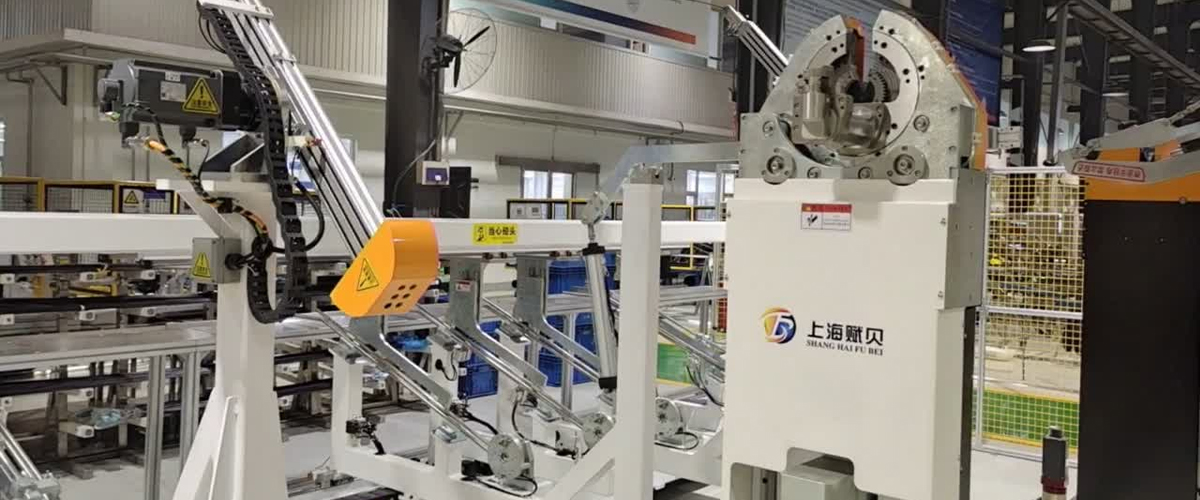
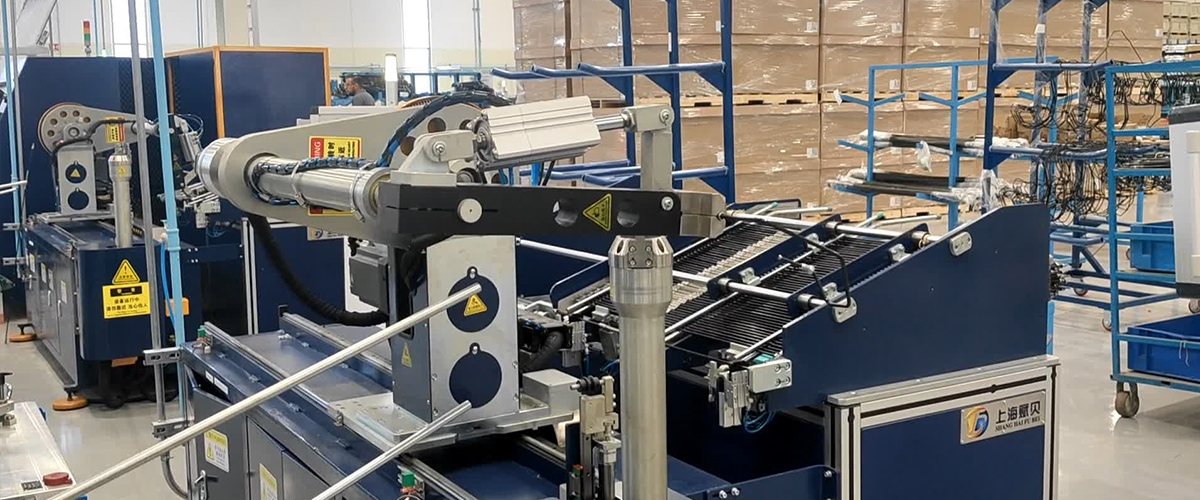
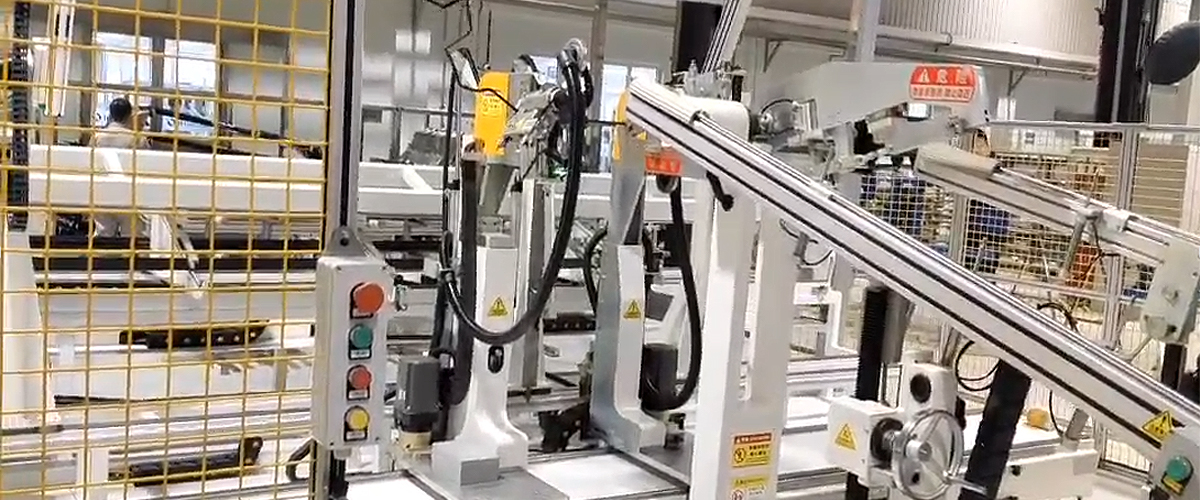

 [email protected]
 +86-021-57678482
 +86-18001603006
 Building A, No. 299 Tangming Road, Shihudang Industrial Zone, Songjiang District, Shanghai, China
Copyright © Shanghai Fubei Electromechanical Equipment Co., Ltd. All Rights Reserved Automated Pipe Processing Equipment Factory
