

 English
  русский
  Español
  عربى
عربى Industry News
Home / News / Industry News / Double-Head Pipe Bending Machine: A Practical Guide for Tube Fabricators

In tube and pipe fabrication, the real cost of a bent part often hides in the second pass. Whenever a component needs two symmetrical bends, such as a U-bend, a pair of matching offsets, or the two legs of a rectangular frame, a single-head machine forces the operator to bend, release, reposition and bend again. A double-head pipe bending machine removes that duplication by mounting two bending heads on one bed so both bends are formed in a single synchronized cycle.
This guide explains how these machines work, how the main configurations differ, which specifications decide whether a machine fits your parts, and where a double-head platform earns its place on the shop floor.
Content
A double-head bender carries two bending units, usually described as left and right heads, on a common machine base. The tube is clamped and held between them, and each head rotates a bend die around its own center to form one bend. Because the heads sit on the same axis, the distance between the two bends is set by the spacing of the heads, while the bend angle on each side is controlled by the machine control system or by adjustable mechanical stops.
On servo-driven machines, both head rotation and tube positioning are programmable, so changing from one part to the next means recalling a stored program instead of rebuilding the setup by hand. That is where the real advantage lies: repeatable geometry, and a cycle time that is close to half of what a single-head machine needs for the same symmetrical part.
One boundary is worth understanding before you buy. Most double-head machines bend in a single plane. If your part also needs out-of-plane bends, you generally need a CNC bender with a rotating carriage, or a second operation on another machine. Matching the machine architecture to the part geometry is the first decision, and everything else follows from it. If you would like a step-by-step refresher on the fundamentals, our article on how a tube bending machine works covers the basic mechanics of bending, clamping and springback.
Neither platform is universally better. The table below summarizes the trade-offs we discuss most often when customers send us their part drawings.
| Consideration | Single-Head CNC Bender | Double-Head Pipe Bending Machine |
|---|---|---|
| Bends per cycle | One | Two, formed simultaneously |
| Typical part shapes | Complex three-dimensional tube runs | Symmetrical U-bends, offsets, parallel legs |
| Cycle time on symmetrical parts | Longer, because of repositioning between bends | Short, completed in one cycle |
| Bend plane | Multi-plane with carriage rotation | Usually a single plane |
| Tooling | One set of bend and clamp dies | Two matching sets, often mirrored |
| Best fit | Low volume, high variety, 3D parts | Medium to high volume, repetitive symmetrical parts |
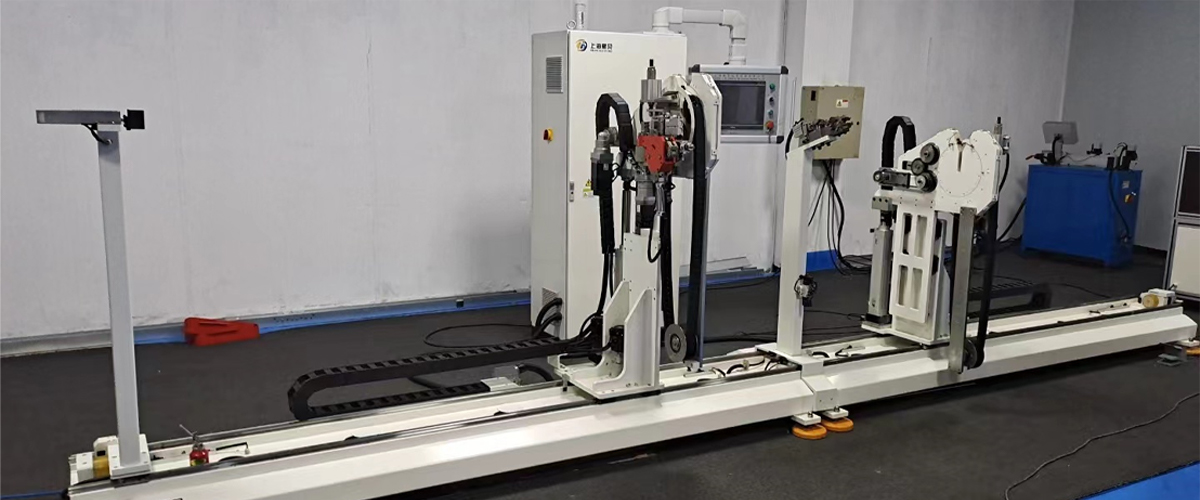
Servo motors drive both heads and the positioning axes, and bend angles are entered on a touch screen rather than dialled in by hand. Programs for dozens of part numbers can be stored and recalled, which keeps changeover short and keeps the first part of a batch identical to the last. This is the configuration we recommend when a shop bends a mix of symmetrical parts and changes over several times a shift.
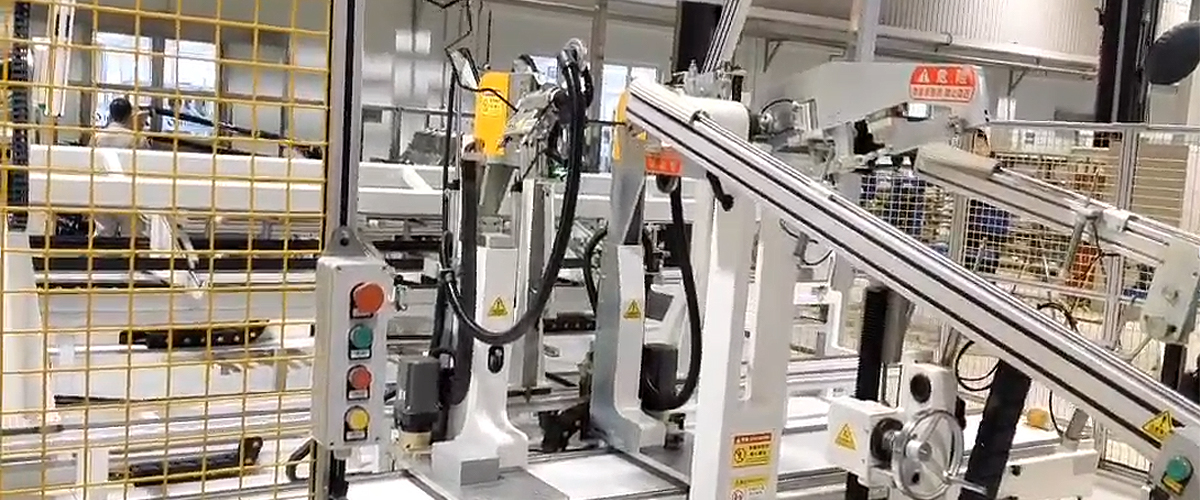
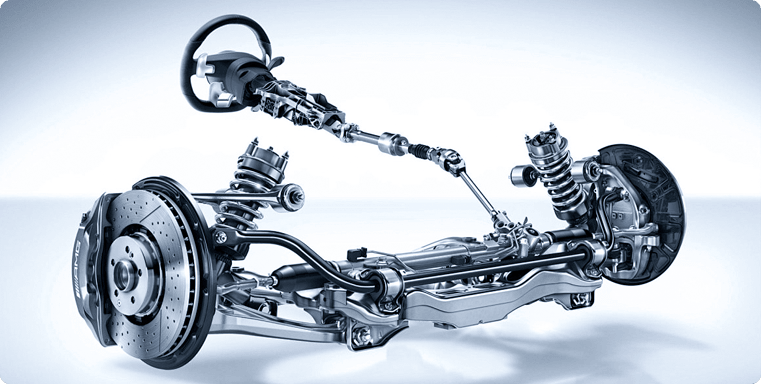 CNC Double-Head Pipe Bending MachineDesigned for high-precision, high-volume production of brake and hydraulic lines in the 1,000–5,000 mm length range, this CNC dual-head pipe bender integrates fully au...View Product →
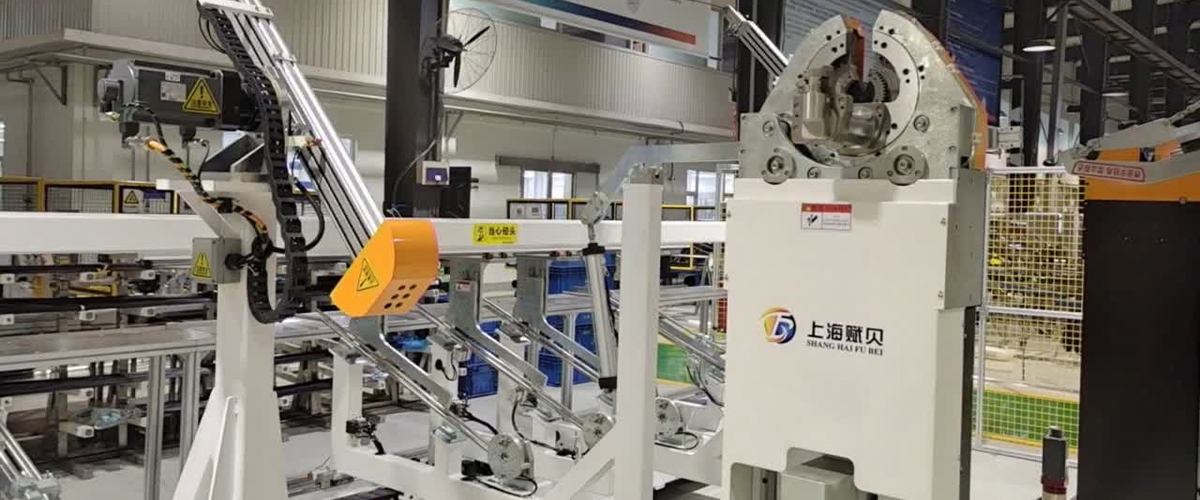
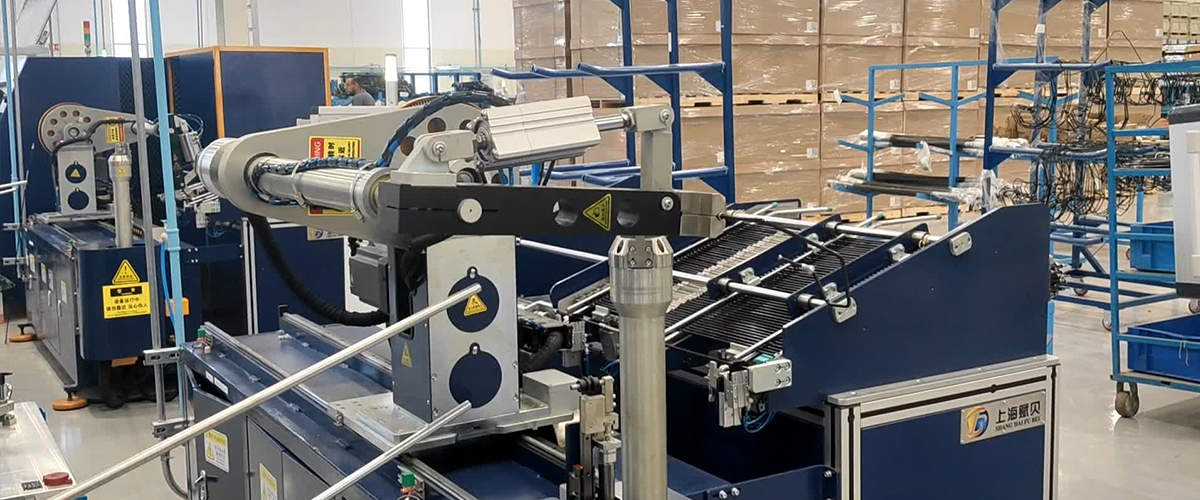
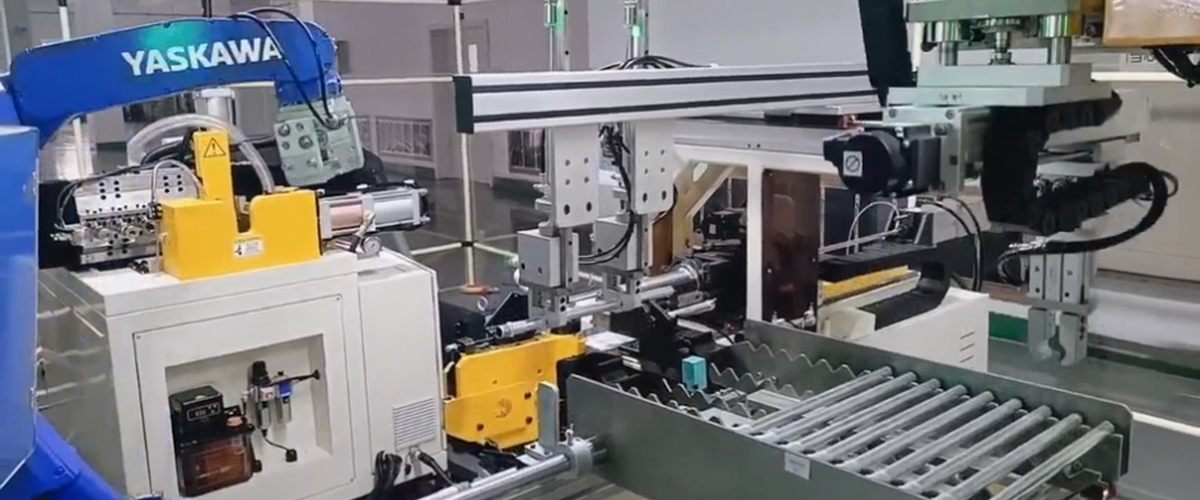
Automation adds feeding, positioning and discharge, so the operator supervises the cycle instead of handling every tube. Throughput rises and, just as importantly, so does consistency, because the tube is located by the machine rather than by hand. These machines suit large batches of a single part number and can be linked into a wider tube processing line with end forming or cutting equipment.
Fully Automatic Double-Head Pipe Bending MachineBuilt for unattended, high-volume production of tubes in the 1,000–5,000 mm length range, this fully automatic CNC dual-head pipe bender handles the complete processin...View Product →
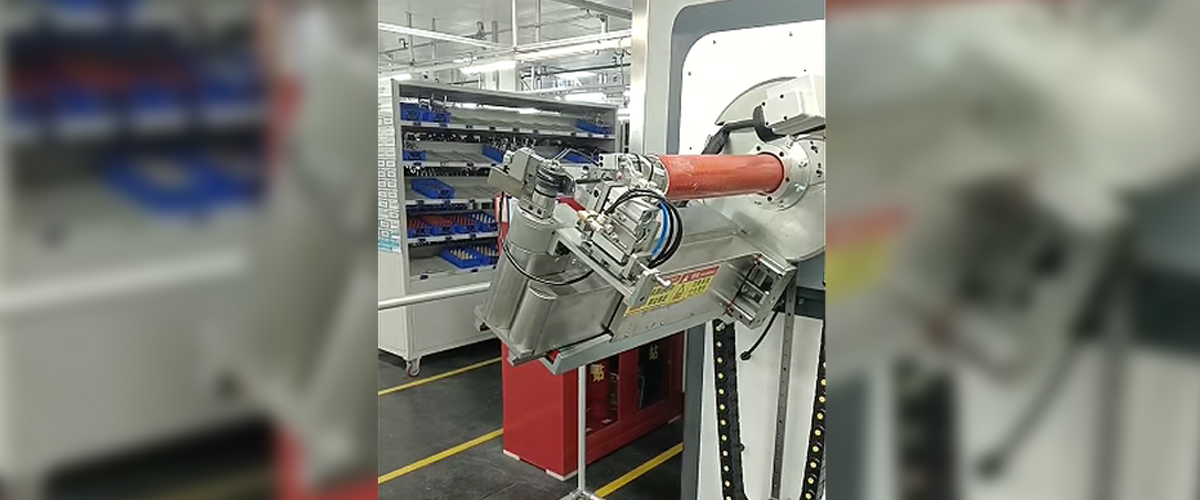
Brake lines are a special case. Diameters are small, walls are thin, and the surface is often coated or plated, so clamping must be gentle and the tooling must be finely finished. Machines built for this work use close-pitch heads, precise bend dies and carefully controlled clamping pressure to hold the bend radius without ovality, buckling or surface marks.
Double-Head Pipe Bender For Brake PipesDual-Station Synchronization: Breaking Through Productivity Bottlenecks Brake pipes are typically long, slender tubes — such as automotive brake lines. Conventional si...View Product →Two machines that look alike in a catalogue photo can differ completely in what they can actually bend. Before comparing prices, confirm these points against your own part drawings.
If a supplier cannot run a bending trial with your material and wall thickness, ask for a video of a comparable part being produced. Sound and cycle time in a video often reveal more than a specification sheet.
Automotive manufacturing is where double-head bending proves itself most clearly. Brake lines, fuel and vapor lines, and air conditioning pipes all contain repeated symmetrical bends, and volumes are high enough that cycle time matters. In air conditioning production, the same logic applies to condenser and evaporator piping, where two bends of matching radius must sit at an exact distance apart.
Beyond metal tube, nylon and PA tubes used in fluid and pneumatic systems can also be bent on double-head platforms when the tooling is adapted to the softer material and its different springback behaviour. The common thread is repetition: if a large share of your parts is symmetrical, the second head is doing paid work on every cycle.
Good results come from the setup, not from the control panel. The following sequence is a reliable routine.
Because a double-head machine is configured around your parts, the supplier matters as much as the machine. Ask how the bend dies are designed, how the control system handles springback, and who supports the machine once it is installed. A supplier that builds both the machine and the tooling can take responsibility for the finished bend, not just for the frame.
We are Shanghai Fubei Electromechanical Equipment, a manufacturer of tube processing machinery founded in 2012. Our double-head benders, single-head benders, nylon tube benders, end forming machines and automatic production lines use servo control, human-machine interfaces and computer control systems, and we build custom lines for automotive and air conditioning customers. You can read more about our background in tube processing equipment and the way we approach custom projects.
In most cases each head is tooled to produce the same radius, which is what symmetrical parts require. Some machines can be set with different dies on each side, but the part must still be geometrically compatible with a shared bending plane.
For thin-wall or large-radius bends, a mandrel or wiper die may be necessary to prevent flattening and wrinkling. Space between the heads is limited, so discuss mandrel support with your supplier before the machine is built.
Steel, stainless steel, copper, copper-nickel, aluminium, nylon and PA tubing are all common. Material and wall thickness determine the tooling, the clamping pressure and the amount of springback compensation required.
A double-head pipe bending machine is not simply a faster single-head machine. It is a different way of planning a part, and the savings come from eliminating a second handling operation on every cycle. If your production is built around symmetrical bends, it is worth sending a drawing and a target cycle time to a manufacturer and asking what the machine would look like for your specific tube.

 [email protected]
 +86-021-57678482
 +86-18001603006
 Building A, No. 299 Tangming Road, Shihudang Industrial Zone, Songjiang District, Shanghai, China
Copyright © Shanghai Fubei Electromechanical Equipment Co., Ltd. All Rights Reserved Automated Pipe Processing Equipment Factory
