About Us

Innovate Tube Machining Serve Global Industries.

Shanghai Fubei Electromechanical Equipment Co., Ltd.
  • 0+

    Years Experience
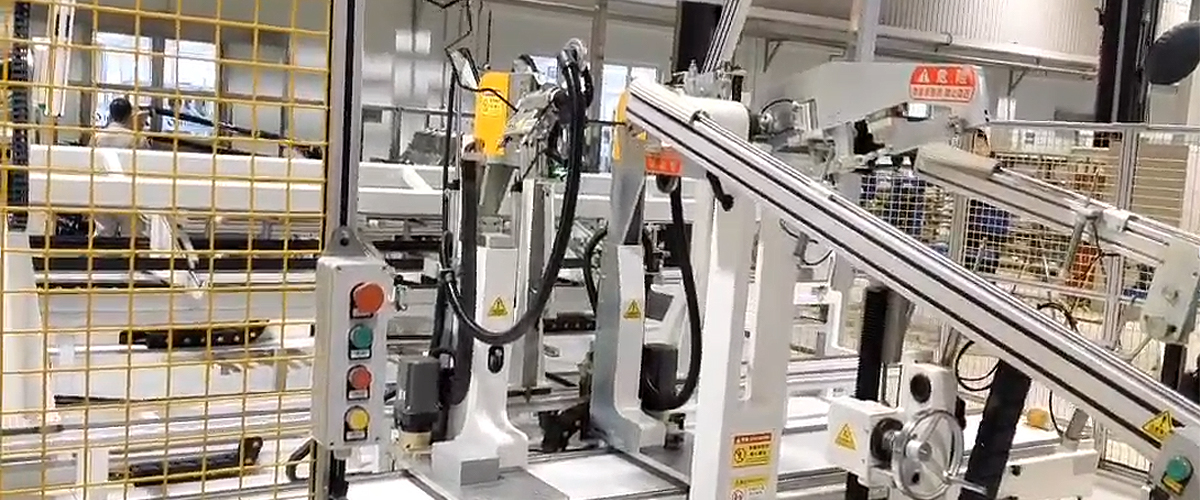
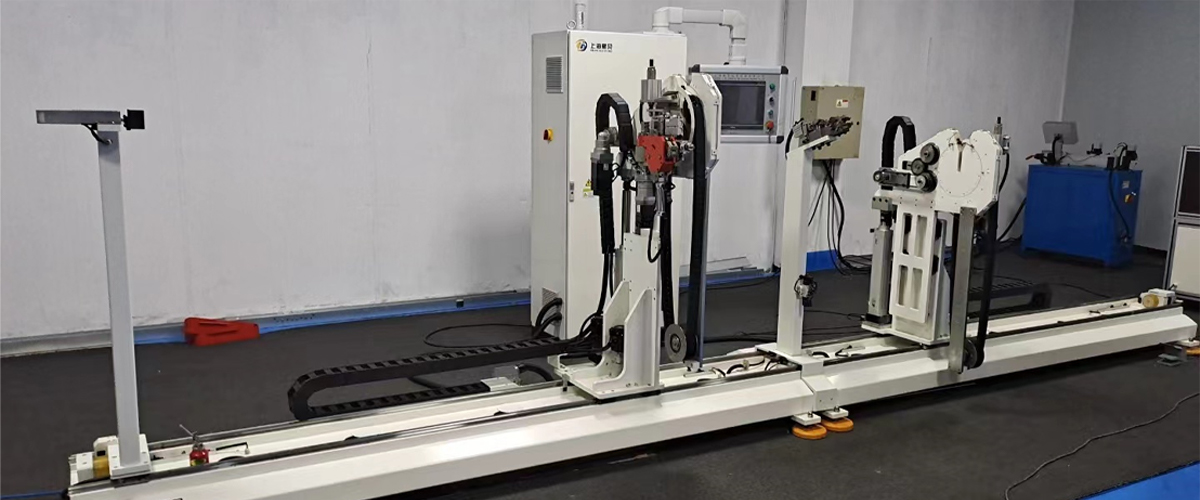
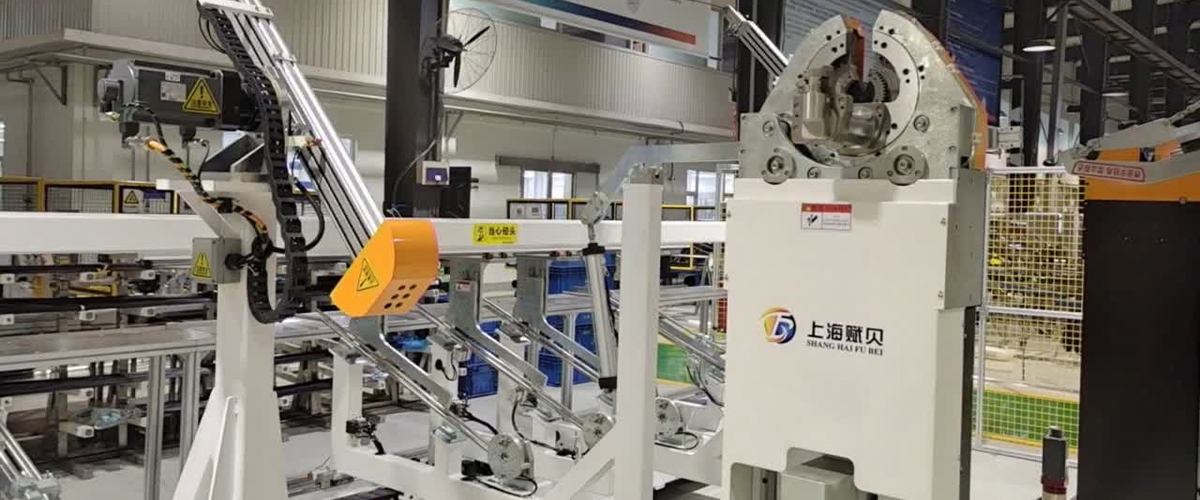
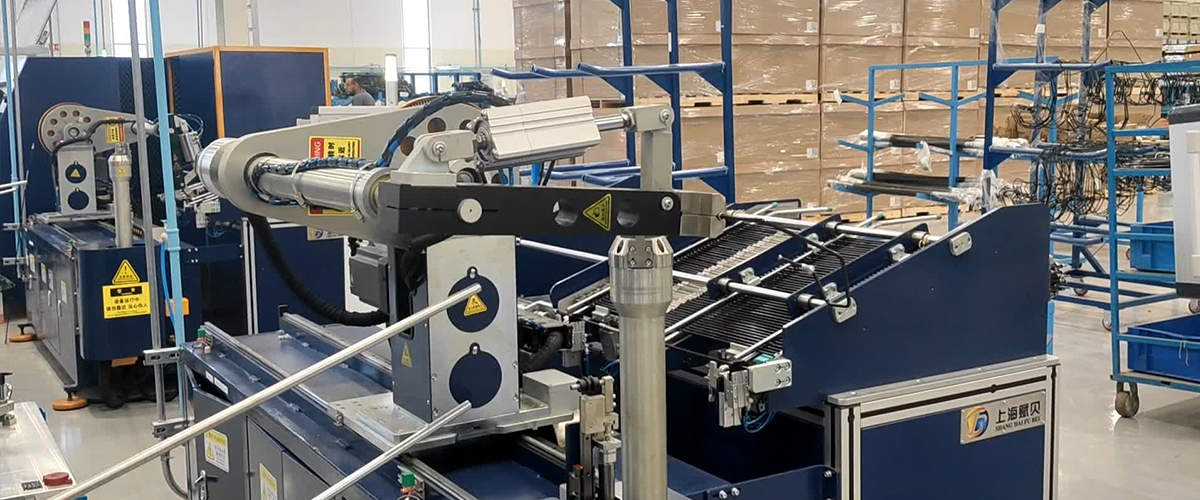
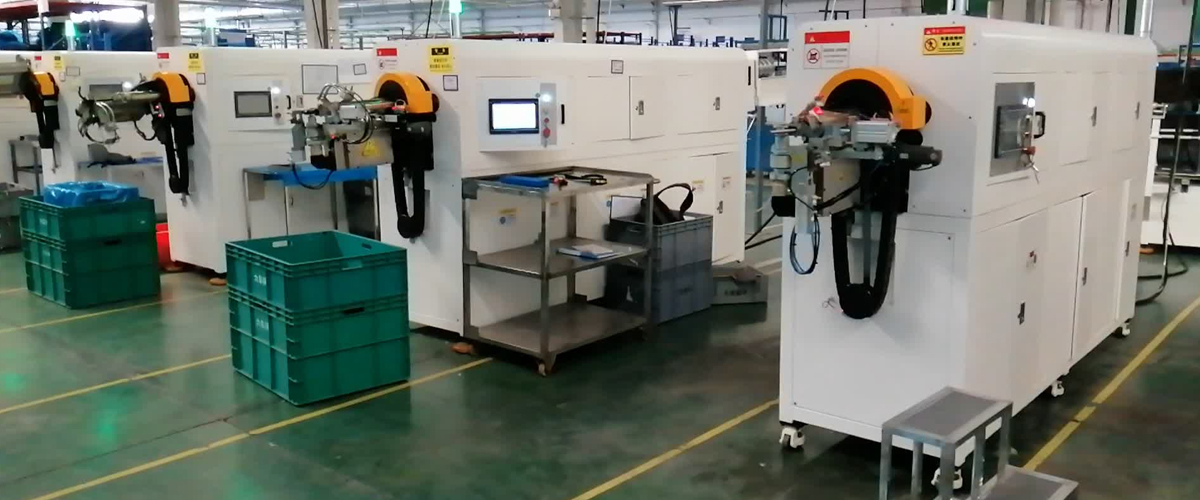
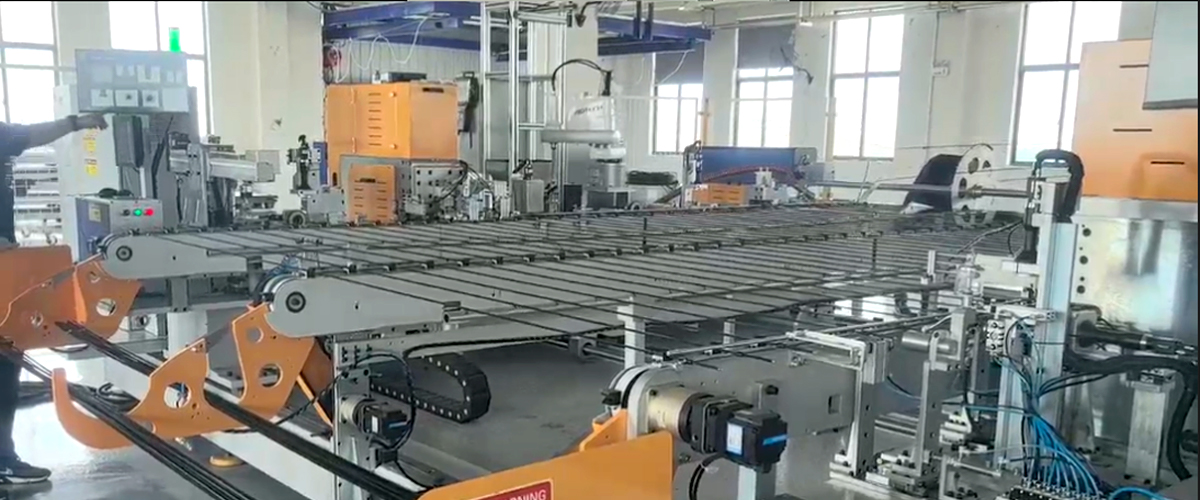
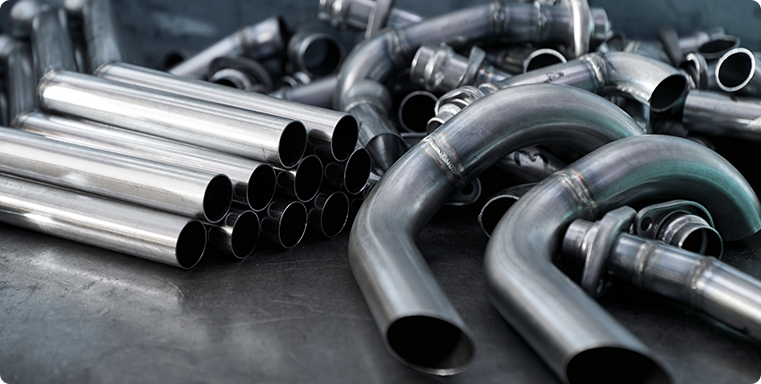
Shanghai Fubei Electromechanical Equipment Co., Ltd., established in 2012, is a high-tech enterprise specializing in the manufacture of tube processing equipment. The company primarily manufactures automated equipment such as tube benders, tube end forming machines, chamfering machines, spinning machines, and crimping machines, and offers automated tube processing production lines as well as custom solutions. Utilizing servo control, human-machine interfaces, and computer control systems, our products feature high precision, high efficiency, and long service life, and are widely used in industries such as automotive and air conditioning manufacturing.

View More
Shanghai Fubei Electromechanical Equipment Co., Ltd.

Company Philosophy

Integrity, Innovation, Service, and Mutual Benefit as our guiding principles

Company Philosophy

Integrity, Innovation, Service, and Mutual Benefit as our guiding principles
OUR PRODUCTS ARE SOLD BOTH DOMESTICALLY AND INTERNATIONALLY, HELPING TO DRIVE INDUSTRY UPGRADES. OUR PRODUCTS ARE SOLD BOTH DOMESTICALLY AND INTERNATIONALLY, HELPING TO DRIVE INDUSTRY UPGRADES.
Products

Connecting Global Pipe Processing.

View All Products
  • Double-Head Pipe Bending Machine
    Dual-Station Synchronization: Breaking Through Productivity BottlenecksBrake pipes are typically long, slender tubes — such as automotive brake lines. Conventional single-head benders require two separate clamping operations to process both ends, which is time-consuming and prone to positioning errors. The dual-head pipe bender features a synchronized/independent dual-bending-head design that completes both-end bending in a single clamping operation, improving production efficiency by 60%–80% compared to single-head machines. Paired with a servo-driven feeding system (maximum feeding speed: 700 mm/s), the machine enables continuous multi-bend processing, cutting delivery cycles by nearly half in batch production — well suited to the high-volume output demands of the automotive parts industry. The symmetric dual-station setup also reduces the unsupported length of pipes during processing, effectively preventing sagging and deformation in long, slender tubes and maintaining straightness accuracy. Micron-Level Precision for Braking System ReliabilityThe bending accuracy of brake pipes directly affects brake fluid flow efficiency and system sealing integrity. The dual-head bender ensures precision through three technical measures: ① A CNC/PLC control system paired with high-end components such as Beckhoff controllers, achieving bending angle accuracy of ±0.05°–±0.1° and repeat positioning accuracy as low as ±0.02 mm; ② Hydraulic/pneumatic dual-clamping devices that firmly hold pipes throughout bending, preventing dimensional deviation from slippage — particularly suitable for thin-walled brake pipes to prevent wall collapse; ③ Offline simulation combined with online inspection, preemptively identifying machining interference and monitoring bending parameters in real time, keeping finished-part consistency errors at the micron level and meeting the stringent quality standards of the automotive industry for braking components. Broad Process Compatibility for Complex Bending RequirementsBrake pipes must conform to various chassis layouts across different vehicle models, often requiring multi-plane and small-radius bending. The dual-head bender offers strong process flexibility: ① Adjustable parameters for pipe diameter, wall thickness, and bending radius; compatible with carbon steel, stainless steel, and aluminum tubes, covering diameters from 3 mm to 52 mm (customizable), including thin-walled and slender specialty pipes; ② A range of bending die sets combined with 3D visualization programming software to achieve complex three-dimensional bending — even U-shaped and serpentine brake pipes can be formed in a single pass without wrinkles or surface scratches (dies feature anti-scratch coatings to protect pipe finish); ③ Quick die changeover and program storage supporting multiple saved parameter sets, reducing changeover time by more than 50% for small-batch custom orders such as specialty vehicle brake pipes. Smart Integration for Automated, Cost-Efficient ProductionTo address cost-control needs in high-volume brake pipe manufacturing, the machine integrates automation technology throughout:① Robotic loading/unloading and automatic discharge stacking interfaces allow seamless integration into production lines, reducing manual operations and cutting labor costs by over 80% while eliminating human error from manual clamping;② Intelligent functions including automatic weld-seam recognition, clamping force detection, and wear alarms provide real-time monitoring of machine status and processing quality, reducing material waste by 15%–20% in line with green manufacturing principles;③ A multilingual touchscreen interface (Chinese/English) with graphical animation programming and collision detection lowers operator training requirements, enabling new users to become productive quickly. Stable and Reliable for Long-Term Continuous OperationBrake pipe production demands around-the-clock operation. The dual-head bender features a rigid, integrated frame engineered to carry dual-head bending loads with minimal vibration. Core components — including the hydraulic power unit and linear guides — are sourced from recognized brands such as Schneider and Igus, keeping failure rates below 0.5% and targeting a service life of no less than 10 years. An automatic lubrication system and sealed cabinet design allow the machine to perform reliably in demanding workshop environments, reducing maintenance frequency and supporting long-term stable batch production — particularly suited to the large-scale, standardized manufacturing operations of automotive parts suppliers.
  • Double-Head Pipe Bending Machine
    Designed for high-precision, high-volume production of brake and hydraulic lines in the 1,000–5,000 mm length range, this CNC dual-head pipe bender integrates fully automatic loading and unloading at both ends, minimizing manual intervention while maintaining consistent output quality. Control and Operation: The machine operates via a CNC control system with a touchscreen interface, making programming and parameter adjustment accessible without specialized training. All axis movements are executed through a 15-axis servo drive system, delivering coordinated, high-accuracy motion across every phase of the bending cycle. Servo feedback ensures repeatable positioning and smooth multi-bend sequences, offering a measurable advantage in dimensional consistency over conventional hydraulic-only systems. Processing Capability: The machine handles tube outer diameters from 4.76 mm to 6.35 mm with a wall thickness of 0.7 mm, and supports bending angles up to 180° — covering the full range of shapes required in brake pipe and hydraulic line applications. Coordinate Calculation and Straight-Segment Generation: An integrated calculation module automatically converts XYZ spatial coordinates into YBC machine parameters (feed distance, bending angle, rotation angle) and generates precise straight-segment values between any two bend points. This simplifies complex program creation and reduces the likelihood of setup errors, particularly for multi-bend three-dimensional tube geometries. Per-Operand Correction Fields: Each programmed operand is paired with a dedicated correction field displaying the original set value and the applied positive or negative offset. Corrected values can be saved independently, allowing fine-tuning without modifying the master program — supporting consistent quality across long production runs and between shifts. 50 Bend Points Per Head: Each bending head supports up to 50 programmable bend points, providing ample capacity for complex routing geometries and reducing the need to split complicated parts across multiple clamping cycles. Three-Layer Die Wheel System: The three-layer die wheel configuration expands forming options: the first layer processes standard bare tubing; the second layer accommodates jacketed or insulated pipes without damaging the outer sheath; the third layer provides a clearance position to prevent tooling collision during tight multi-bend sequences. Independent Bend Direction per Step: Each bending head can be independently set to bend left or right at every individual processing step, giving programmers precise control over complex three-dimensional tube shapes without repositioning or re-clamping the part.
  • Double-Head Pipe Bending Machine
    Built for unattended, high-volume production of tubes in the 1,000–5,000 mm length range, this fully automatic CNC dual-head pipe bender handles the complete processing cycle — from tube loading through dual-end bending to finished-part discharge — without requiring manual intervention at any stage. End-to-End AutomationAutomatic loading and unloading systems at both ends feed tubes into the machine and remove finished parts continuously, sustaining a steady production rhythm across full shifts. Eliminating manual loading and unloading not only reduces labor requirements but also removes the positioning variation that manual handling introduces, contributing directly to part-to-part consistency.CNC Control with Touchscreen InterfaceAll machine functions are managed through a CNC control system accessed via a touchscreen panel. Operators can create, load, and modify programs from a single interface, with no need for manual mechanical adjustments between runs. 15-Axis Full Servo DriveEvery driven axis — feed, rotation, clamping, and bending — is servo-controlled across all 15 axes. This level of coordinated servo coverage supports precise, repeatable motion throughout the entire cycle and allows the machine to execute complex multi-bend sequences with consistent accuracy across high-volume production runs. XYZ-to-YBC Coordinate ConversionThe built-in programming system converts three-dimensional XYZ tube geometry directly into YBC machine parameters and automatically calculates straight-segment feed lengths between bend points. Programs can be generated from design data without manual coordinate transformation, reducing setup time and the risk of programming errors. Per-Operand Correction with Saved ValuesEach programmed parameter includes a paired correction field that records the baseline value and any applied offset. Corrections are saved with the program and persist across production runs, allowing the machine to account for material springback or tooling characteristics without altering the master program. 50 Bend Points Per HeadBoth the left and right bending heads support up to 50 programmable bend points each, providing sufficient capacity for complex tube geometries without requiring multiple clamping operations or program splits. Three-Layer Die WheelThe three-layer die wheel system accommodates different tube types within the same machine: layer one for standard bare tubing, layer two for jacketed or insulated tubes, and layer three as a clearance position to prevent tooling interference during tight multi-bend sequences. Per-Step Bend Direction SelectionEach bending head can be independently configured for left or right bending at every individual step, enabling the machine to produce tubes with alternating bend directions in a single uninterrupted automatic cycle.
  • Tube Bending Machine
    Full Automation: Reducing Costs While Improving ThroughputThe machine features a fully automatic bending system requiring no manual intervention throughout the bending process. From tube loading and bend forming to finished-part output, it operates as an integrated, intelligent workflow. This eliminates a significant portion of manual labor, reducing recruitment, training, and management costs, while removing the dimensional errors that manual handling can introduce. Single-part processing time is meaningfully shorter, making the machine particularly effective in batch production environments — helping manufacturers increase output capacity and respond to order demand more quickly. Compact Design with Compatibility for Complex GeometriesThe bending heads are arranged in a compact layout that minimizes floor space requirements while maintaining structural stability, adapting to a wide range of workshop configurations. Equally important, the thoughtful mechanical design gives the machine strong process compatibility: it handles multi-curvature profiles and non-standard tube geometries without difficulty. Whether applied to automotive components, engineering machinery piping, or HVAC tubing, the machine achieves consistent, accurate forming results — moving beyond the single-geometry limitations of many conventional pipe benders. Core Specifications Supporting Precision and EfficiencyThe machine's control system is built around a Siemens PLC paired with full servo drive technology, establishing a high-precision, high-response control architecture. The servo drive system ensures accurate and repeatable bending motion, with repeat positioning accuracy that exceeds typical industry benchmarks, effectively maintaining dimensional consistency and reducing scrap rates. The efficient power transmission design also enables faster cycle times — improving throughput while reducing energy consumption per part, delivering both productivity and operational economy. Consistent Performance Across Multiple IndustriesBuilt on high-quality core components and a mature technical platform, the machine sustains stable performance through extended high-intensity production, meaningfully reducing maintenance costs and unplanned downtime risk. It meets the processing requirements of tubes in a range of materials — including steel, aluminum, and copper — and various specifications, serving the needs of automotive manufacturing, aerospace, engineering machinery, furniture and appliance production, and HVAC and refrigeration industries. This broad applicability allows manufacturers to deploy a single flexible solution across diverse product lines.
  • Nylon tube bending machine
    Nylon tubing — including PA6 and PA66 materials — must be heat-softened before it can be formed without cracking or uneven deformation. Traditional processing requires separate heating, bending, and cooling stages, creating wait time between steps and risking quality issues whenever the tube loses temperature during transfer. This nylon tube bending machine eliminates those vulnerabilities through a fully integrated heating-bending-cooling design. Precision Thermal Control: The machine is equipped with a precision temperature-controlled electric heating cylinder with a peak output of 6.5 kW, maintaining continuous, stable tube temperatures throughout the process. The heating system covers the 80–125°C range required by PA6, PA66, and similar nylon materials, ensuring the tube reaches a consistent forming temperature without overheating, which can degrade material properties. Rapid Post-Bend Cooling: Following the bending operation, an integrated air-cooling system rapidly brings the tube back to a stable temperature, setting the formed shape in place before springback can develop. This quick-set capability is essential for maintaining accurate bend angles and dimensional repeatability across a production run. Fast Cycle Times: Single-bend cycle time ranges from 0.1 to 8 seconds depending on tube geometry and material specification, supporting rapid throughput even on parts with multiple bends. Servo Dual-Feed System: Tube advancement is handled by a servo-driven dual-feed system with a feed length tolerance of ±1.5 mm. This level of feed accuracy supports continuous multi-bend processing in a single tube loading cycle, keeping cumulative length errors within acceptable limits even on parts with numerous bend points. Measurable Efficiency Gains: Compared to conventional multi-stage setups, this machine improves overall production efficiency by more than 50%. In batch production, inter-stage waiting time is reduced by approximately 30%, making it a practical fit for the high-volume demands of automotive fluid lines, pneumatic components, and related applications. Consistent Quality: Through a Unified Process By consolidating heating, bending, and cooling within a single automated workflow, the machine removes the temperature variation introduced by manual tube transfer between separate workstations. The result is a more predictable thermal environment for each part, which directly translates into tighter consistency across finished batches.
  • Nylon tube bending machine
    Processing nylon tubing such as PA6 or PA66 requires precise thermal management: the material must reach a specific temperature range to form cleanly, and must be cooled promptly after bending to retain its shape. Traditional equipment separates these steps, creating thermal inconsistency and extending cycle times. This machine integrates all three phases — heating, bending, and cooling — into a single, continuous process. Integrated Heating System: A precision-controlled electric heating cylinder (peak power: 6.5 kW) delivers steady, uniform heat to the tube before bending. Temperature regulation is maintained throughout the heating phase to keep the material within the 80–125°C window appropriate for PA6, PA66, and similar grades, preventing both under-heating (which causes cracking) and over-heating (which degrades material strength). Immediate Post-Bend Cooling: The built-in air-cooling system activates immediately after bending, locking the tube into its formed shape before thermal recovery can introduce angle or geometry deviation. This integrated cooling step is what makes the machine's output geometry reliable and repeatable — a significant advantage over manual or multi-station approaches where cooling time and conditions are harder to control. Servo Dual-Feed for Multi-Bend Accuracy: The servo-driven dual-feed mechanism advances the tube with a feed length tolerance of ±1.5 mm, supporting sequential multi-bend operations in a single loading cycle. Consistent feed accuracy means that the distance between bend points remains controlled even on complex tube profiles. Cycle Speed: Individual bend operations complete in as little as 0.1 seconds, with a practical range of 0.1–8 seconds depending on tube geometry, providing flexibility for both simple and complex part programs. Production Efficiency: Against conventional multi-stage equipment, this machine delivers more than 50% improvement in overall production efficiency, and reduces inter-process idle time by approximately 30% in batch scenarios. These gains are directly applicable to high-volume applications such as automotive cooling lines, brake hose routing, and pneumatic circuit tubing. End-to-End Quality Consistency: With heating, bending, and cooling all occurring within one automated cell, part quality no longer depends on the speed or care of manual transfers between stations. Every tube in the batch experiences the same thermal profile and the same forming conditions, which translates into tighter dimensional consistency and lower rejection rates.
  • Products
    This automated pipe processing line handles the complete end-to-end production sequence for tubes in the 1,000–5,000 mm length range, integrating automatic loading, deburring, chamfering, end forming, nut assembly, and dimensional inspection into a continuous, unified workflow. Automatic Loading: Tubes are fed into the line automatically from a supply station, removing the need for manual positioning at the start of the sequence and maintaining a steady, consistent feed rhythm into downstream processes. Deburring and Chamfering: Upon entry, both ends of each tube are deburred and chamfered to remove sharp edges and prepare the pipe ends for forming and assembly. Clean, correctly chamfered ends are critical for reliable sealing and connection performance in the finished assembly. End Forming — Both Ends Simultaneously: The line performs end forming on both ends of the tube at the same time, halving the cycle time compared to sequential single-end processing. Forming operations are carried out to the specified geometry, with all positioning and depth adjustments servo-driven for high dimensional accuracy and repeatability. Automated Nut Assembly: Following forming, an integrated nut assembly station automatically installs the specified nut onto each pipe end. Automating this step eliminates a manual sub-assembly operation that is labor-intensive and a common source of positioning inconsistency. Dimensional Inspection: Each finished part is measured automatically for key dimensions — including end geometry, overall tube length, and nut assembly position — before leaving the line. Parts that fall outside tolerance are identified and separated, preventing non-conforming product from reaching downstream assembly and reducing overall rework costs. Recipe-Based Changeover: All process parameters — including tube diameter, length, forming geometry, and nut type — are stored as named production recipes. Switching between part numbers requires only recipe selection; the machine automatically adjusts all relevant axes and settings, keeping changeover time short and reducing the risk of setup errors. Data Storage and Traceability: Processing data for each part or production batch is recorded and retrievable, supporting quality traceability requirements common in automotive and regulated supply chains. High Automation with Servo Precision: All positioning and adjustment functions throughout the line are servo-driven, delivering consistent accuracy across long, uninterrupted production runs. The combination of simultaneous dual-end processing and full automation results in high throughput with minimal operator involvement beyond initial setup and monitoring.
  • Products
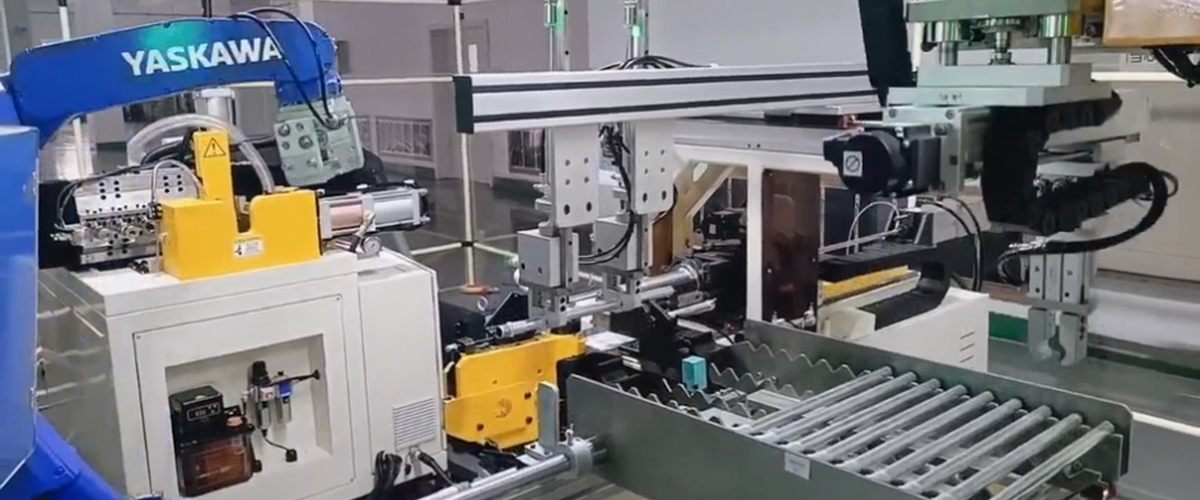
    This flexible automated line is designed for tube parts requiring different operations at each end — integrating automatic loading, first-end forming, tube bending, second-end forming, and unloading into a continuous, fully automated production sequence. Differentiated End Processing: Unlike symmetrical production lines, this system is configured to perform distinct operations at the left and right ends of each tube within a single production pass. This makes it well suited to components where each end serves a different connection or sealing function, requiring a different forming geometry per side — a common requirement in brake lines, fuel lines, and hydraulic circuit tubing. Minimal Manual Input: The only manual step in the entire process is initial tube loading. Once placed, the part is carried through all subsequent forming, bending, and unloading operations automatically. This approach preserves flexibility in accepting tubes of varying or irregular dimensions while keeping labor involvement to a minimum throughout the production cycle. Robotic Arm Inter-Station Transfer: Because the tubes processed by this line are often irregularly shaped or have profiles that do not suit standard conveyors or gravity chutes, a robotic arm handles transfer between stations. The robotic arm adapts to each tube's geometry, ensuring secure, repeatable positioning at every workstation without marking or deforming the part surface. Integrated Bending Station: In addition to both-end forming, the line includes a pipe bending station that shapes the tube body to the required three-dimensional profile. This allows complex multi-operation parts to be completed in a single pass, eliminating the need to route work between separate forming and bending machines. Recipe-Based Changeover: All process parameters are stored as named recipes. Switching to a different part number requires only recipe selection, after which the system reconfigures all axes and process settings automatically. This minimizes changeover downtime and reduces the potential for human error during setup. Standalone Operation Capability: While the line is designed to integrate into broader manufacturing environments, it is also capable of operating as a standalone machine. This gives manufacturers flexibility to deploy it independently when production volumes or workflow requirements do not yet justify full line integration, and to scale up later as needed. Low Labor Dependency: With manual intervention limited to the initial loading step, the line runs with a very small operator footprint. This reduces per-unit labor cost and removes the variability that manual handling at intermediate steps would otherwise introduce into the process.
Our Strengths

High-Precision Pipe Processing.

Key components are highly durable, resulting in longer mean time between failures and
effectively reducing downtime costs
  • 01
    01
    We offer complete turnkey solutions, significantly reducing customers' procurement and integration costs.

    Full Product Range

  • 02
    02
    Our machines feature servo, HMI & computer control for stable, reliable operation.

    Intelligent and Precise Control

  • 03
    03
    We handle large-diameter, thin-walled, and complex forming, delivering industry-leading flexible production.

    High Precision and Efficiency

  • 04
    04
    Automated lines & custom solutions tailored to automotive, HVAC, and new energy tubing.

    Customization Capabilities

Our Services

Continuously Creating Value for Our Customers.

We provide rapid response mechanisms and customized solutions tailored to the specific needs of clients across various industries, ensuring
the efficient and stable operation of equipment through reliable service.
View More
  • Shanghai Fubei Electromechanical Equipment Co., Ltd.

    Customized Solution Design Services

    Based on customers’ pipe specifications, production processes, and capacity requirements, we provide one-on-one planning for automated production lines, equipment selection, and customized non-standard solutions.
  • Shanghai Fubei Electromechanical Equipment Co., Ltd.

    Full-Cycle Maintenance Services

    We have established a comprehensive after-sales response mechanism, offering troubleshooting, spare parts supply, regular maintenance, and upgrade services to ensure the long-term stable operation of the equipment.
  • Shanghai Fubei Electromechanical Equipment Co., Ltd.

    One-Stop Integrated Solutions

    From individual machines to complete production line integration, we provide a full suite of tube processing solutions—including.
  • 1
  • 5
  • 4
  • 2
  • 3
  • 6
  • 7
  • 9
  • 10
Applications

Widespread Industry Applications.

Widely used in numerous industries, such as automotive and air conditioning manufacturing, with excellent adaptability.
View More
  • Automotive Chassis & Exhaust System Manufacturing

    Automotive Chassis & Exhaust System Manufacturing

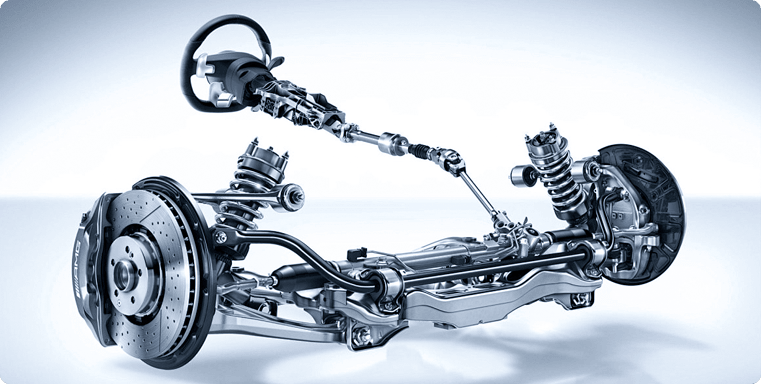
    Our high-precision tube benders and end forming machines are widely used in producing automotive chassis frames, roll cages, and exhaust pipes. With ±0.01mm forming accuracy and stable servo control, ...
  • HVAC & Air Conditioning Pipeline Fabrication

    HVAC & Air Conditioning Pipeline Fabrication

    Our automated tube processing lines support high-volume production of copper and aluminum pipes for air conditioning systems. Integrated chamfering, spinning, and crimping processes ensure leak-proof ...
  •  Industrial Hydraulic & Pneumatic Tubing Production

    Industrial Hydraulic & Pneumatic Tubing Production

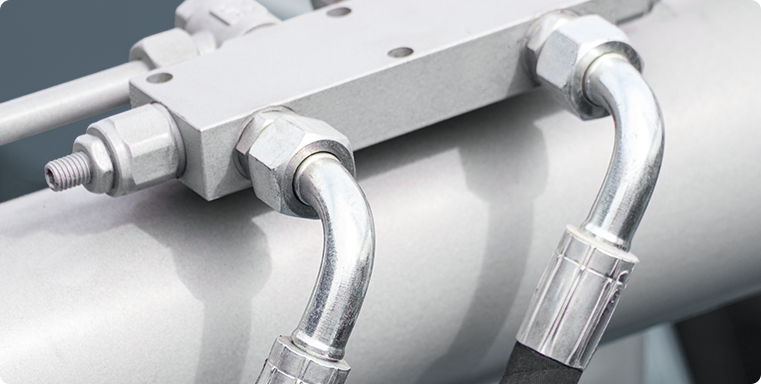
    Our equipment handles carbon steel and stainless steel tubes for hydraulic and pneumatic systems, with computer-controlled precision to meet tight tolerance requirements. From bending to end forming, ...
  • Custom Metal Tube Components for New Energy Vehicles

    Custom Metal Tube Components for New Energy Vehicles

    We provide custom tube processing solutions for new energy vehicle components, such as battery cooling pipes and structural brackets. Our flexible automated lines adapt to complex geometries and multi...
News

Keep Up To Date With Our Latest News.

View More