

 English
 русский
 Español
 عربى
Industry News
Home / News / Industry News / Tube Bending Machine Guide: Types, Selection, Setup, and Operation Basics

Almost every fluid or gas that moves through a machine has to travel around something — an engine block, a compressor, a frame rail, a firewall. Straight tube rarely fits. A tube bending machine is the equipment that turns a straight length of pipe into a smooth, accurate curve, and does it the same way on the tenth part as on the first.
The principle is easy to describe. The machine holds the tube, supports it from the inside and the outside, and pulls it around a rotating die. What separates a clean bend from a flattened or wrinkled one comes down to tooling, control, and the experience of the people setting it up.
Content
Rotary draw bending is the workhorse method in industrial production, and most machines on a modern shop floor are built around it. The tube is loaded and pushed forward until the start of the bend sits against the bend die. A clamp die then closes and locks the tube into the groove of that die. Behind it, a pressure die follows the tube as it travels, while a wiper die supports the inner wall right behind the point of bend. Inside the tube, a mandrel keeps the wall from collapsing.
Then the bend die rotates and drags the tube with it. Because the clamp and the tube move together, the material is stretched on the outside of the curve and compressed on the inside, which is exactly what a good bend requires. Everything else in the machine exists to keep that deformation under control.
| Component | Role in the bend |
|---|---|
| Bend die | Sets the centerline radius and the shape of the curve |
| Clamp die | Locks the tube against the bend die so it cannot slip |
| Pressure die | Follows the tube and controls the outer wall of the bend |
| Wiper die | Supports the inner wall just behind the point of bend |
| Mandrel | Sits inside the tube and prevents the wall from collapsing |
If you are new to the process, our plain-language guide on how a tube bending machine works walks through the same sequence step by step.
Not every curved tube is made the same way. The machine family is broad, and each design suits a different job:
For most manufacturers working with tube up to a few inches in diameter, the first and the fourth types cover the majority of everyday production.
A single-head machine bends one radius at a time. The operator loads the tube, the machine makes the bend, and either the tube is repositioned for the next bend or the part is complete. This is still the most flexible arrangement on the floor: change the tooling and the program, and the same machine handles a different part.
Where the modern single-head machine differs from an older one is in the control. Servo-driven axes control the feed, the rotation between bends, and the bend angle itself. Once a program is proven, the operator does not need to adjust anything by feel — the machine repeats the same motion for the whole batch.
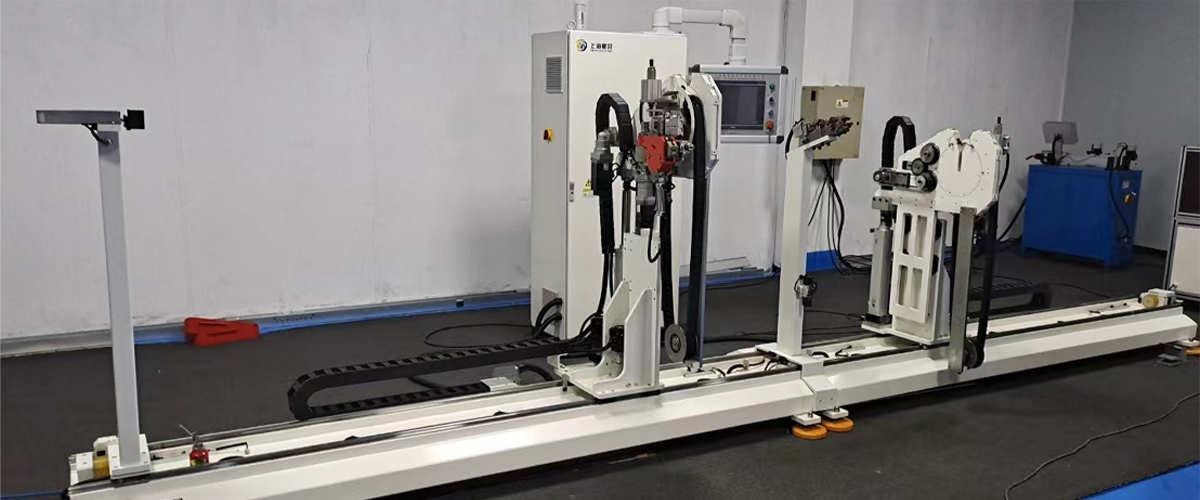
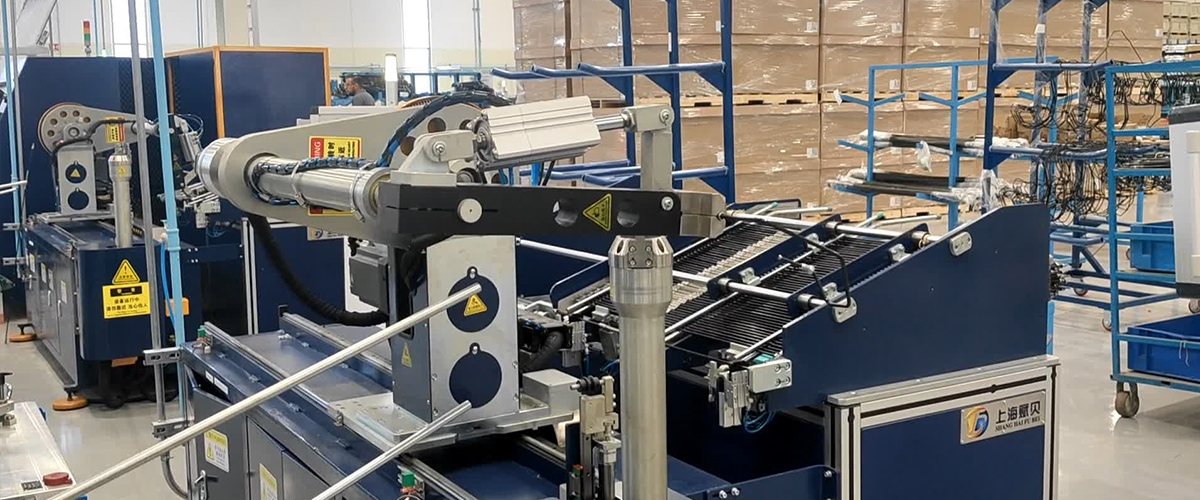
 Fully Automatic Single-Head Pipe Bending MachineServo-driven single-head tube bender with automatic loading and integrated workflow, suited to repeatable batch production across steel, aluminum, and copper tubes.View Product →
A double-head bender carries two bending heads facing each other, so both ends of a tube can be formed at once. For parts with bends on either end and a straight run in between, this cuts the cycle time dramatically and removes the second handling step.
Automotive brake lines are the classic example. They are usually short, thin-walled, and produced in very large volumes, and every millimeter of the bend position matters because the line has to route around suspension and chassis components without touching them. A CNC double-head machine with servo-controlled heads keeps those positions consistent from the first part to the ten-thousandth.
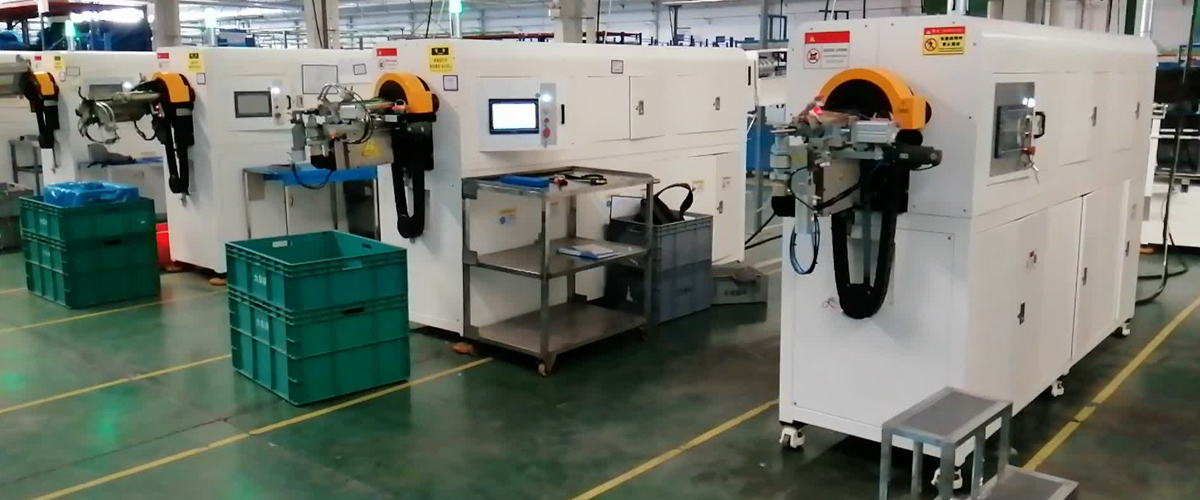
CNC Double-Head Pipe Bending Machine for Brake and Hydraulic LinesHigh-volume double-head tube bender with servo-controlled heads, automatic both-end loading, and CNC programming, suited to consistent brake and hydraulic line production.View Product →Before comparing models, it helps to write down the real requirements of the part. The answers tend to narrow the field quickly:
Get these six answers on paper and the specification almost writes itself.
Plastic tubing does not behave like metal. It springs back more, it scratches easily, and it can kink instead of bending if the radius is too tight. A nylon tube bending machine therefore uses different tooling geometry, gentler clamping pressure, and often a heated or temperature-controlled process to make the material follow the die instead of fighting it.
In air-conditioning and automotive applications, nylon and PA lines are common because they are light, corrosion-resistant and inexpensive. Bending them accurately still depends on the same fundamentals: the right radius, the right support, and a control system that repeats the motion exactly.
Once a part is stable and the volume is high enough, the bending machine stops being a standalone tool and becomes one station in a line. Tubes are cut, bent, end-formed, tested and packed in sequence, often with automatic loading between steps. The gain is not only speed — it is consistency, because the human variation between shifts disappears.
Automotive air-conditioning pipe forming is a good illustration. These lines run several bends, a specific end form and a leak check, all on a part that has to fit a fixed point on the vehicle. Building that flow as one integrated line, rather than five disconnected machines, is usually what makes the difference in scrap rate.
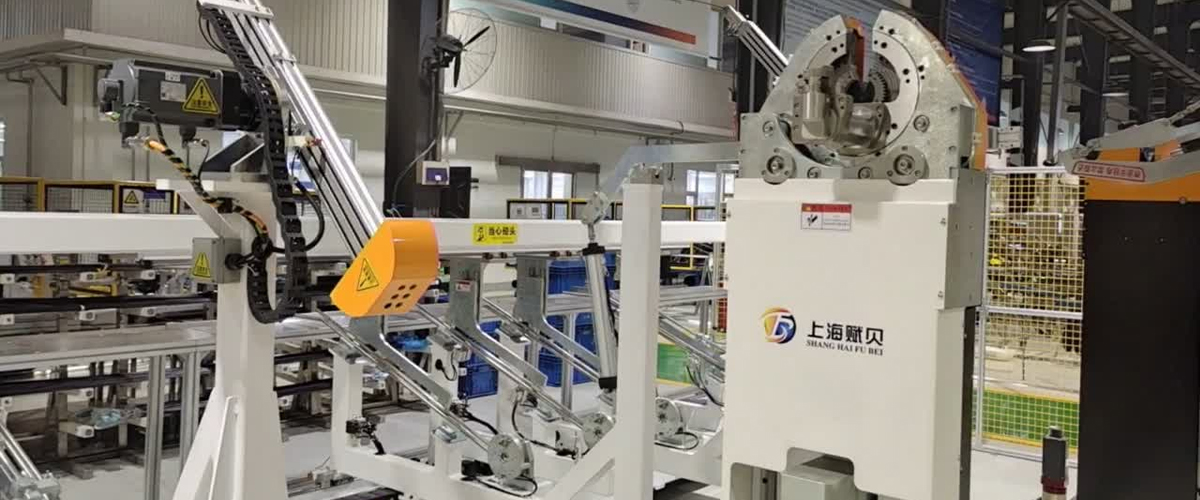
Automated Automotive Air Conditioning Pipe Forming Production LineIntegrated automated line combining end forming, bending, and robotic transfer, reducing handling steps for automotive air-conditioning pipe parts with different operations at each end.View Product →Bending equipment is durable, but accuracy drifts if it is ignored. A few habits keep a machine honest over years of production:
None of this is complicated. It just has to be somebody's job.
Yes, but each diameter needs its own tooling set and its own program. The machine frame stays the same; the bend die, clamp die, pressure die and mandrel change.
With a mandrel and a wiper die, a centerline radius of about one to one and a half times the tube diameter is achievable on many thin-wall materials. Anything tighter starts to require special tooling or a different process.
Not always. If the parts are simple and the volume is low, a well-set manual machine can do the work. CNC pays for itself when repeatability and changeover speed matter more than the initial price.
Choosing a bender is not really a catalogue decision. It depends on the part, the material, the volume and the people who will run the machine. That is why the most useful conversation usually starts with a drawing, a sample part, or a list of what is going wrong today.
We have been building tube processing equipment since 2012, and you can read more about how we work and what a typical project looks like from the inside. If you already have a part in mind, send us the dimensions and the material — we will tell you honestly whether it is a straightforward job or one that needs a closer look.

 [email protected]
 +86-021-57678482
 +86-18001603006
 Building A, No. 299 Tangming Road, Shihudang Industrial Zone, Songjiang District, Shanghai, China
Copyright © Shanghai Fubei Electromechanical Equipment Co., Ltd. All Rights Reserved Automated Pipe Processing Equipment Factory
