

 English
  русский
  Español
  عربى
عربى Industry News
Home / News / Industry News / ATL Molding Automatic Line: Precision Tube Forming Solution for Automotive

In many tube processing plants, the bottleneck is not the individual bending machine but the transfer of parts between stations. Operators move pipes from a bender to an end-forming unit, then to a chamfering machine, and the cycle repeats. Each transfer introduces alignment errors, scratches, and cycle-time variation. The result is a production line that never reaches its theoretical capacity. The ATL molding automatic line from Shanghai Fubei Electromechanical Equipment Co., Ltd. addresses this problem by integrating bending, end forming, and transfer into one controlled system.
Content
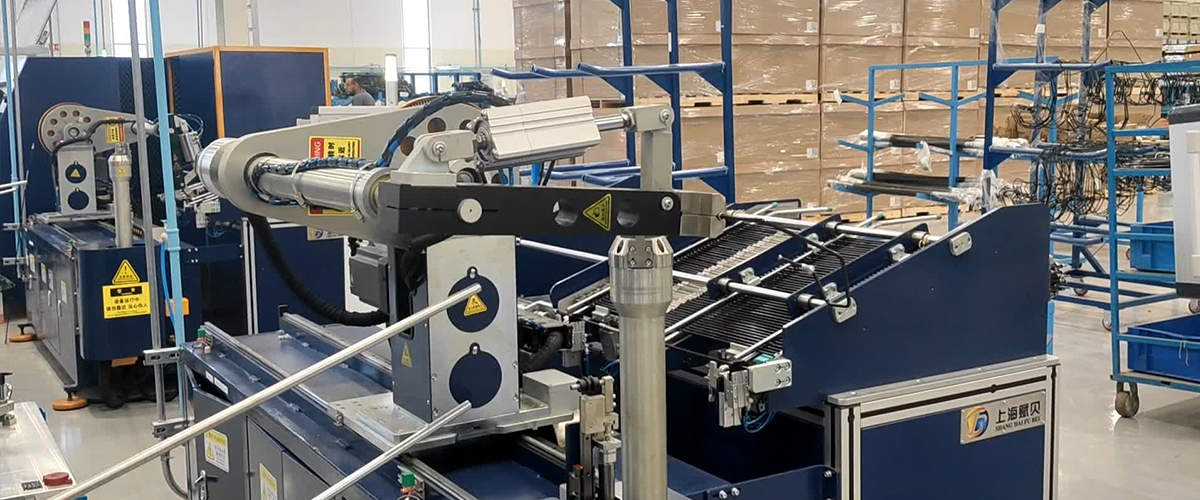
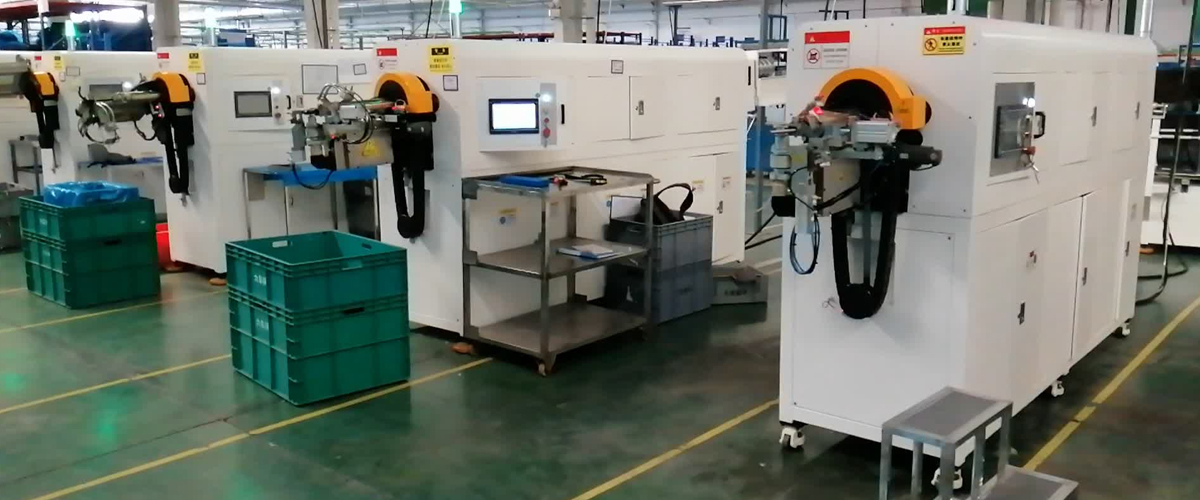
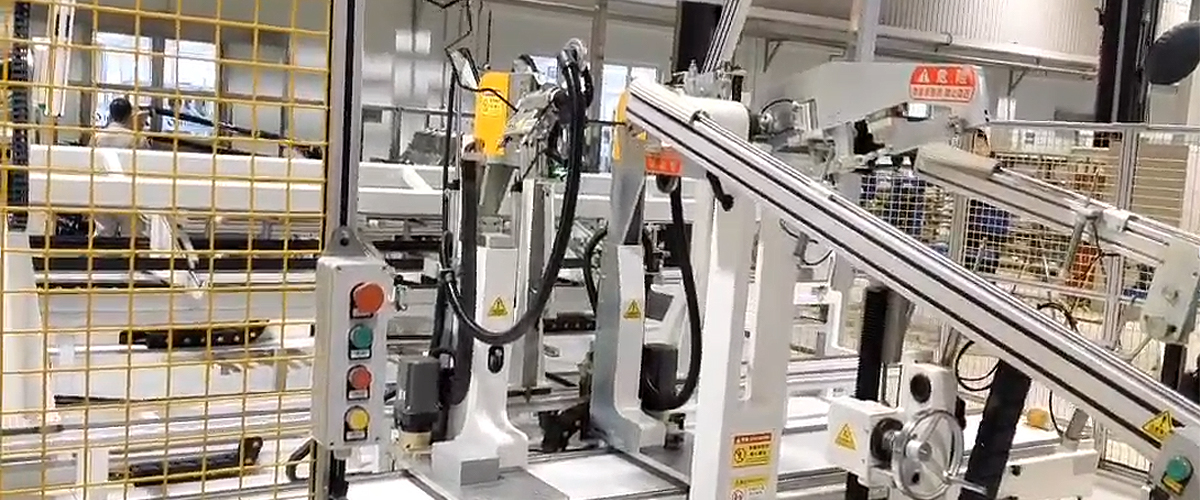
The ATL molding automatic line is a flexible tube processing system designed for high-volume production. It starts with a mechanical or servo-driven feeding mechanism that positions a straight or pre-bent tube into the forming stations. The line then performs multiple operations in sequence: end forming (flaring, flanging, or beading), bending (single or double head), and sometimes chamfering or spinning, depending on the configured stations.
What makes this line different from a cluster of standalone machines is the built-in transfer and PLC coordination. Each station is interlocked with the others, so a tube cannot move to the next operation until the previous one is confirmed complete. This eliminates the common “floating tolerance” problem where parts drift out of spec after several manual handoffs. For high-strength steel tubes or thin-walled aluminum tubes used in automotive air-conditioning lines, this consistency is decisive.
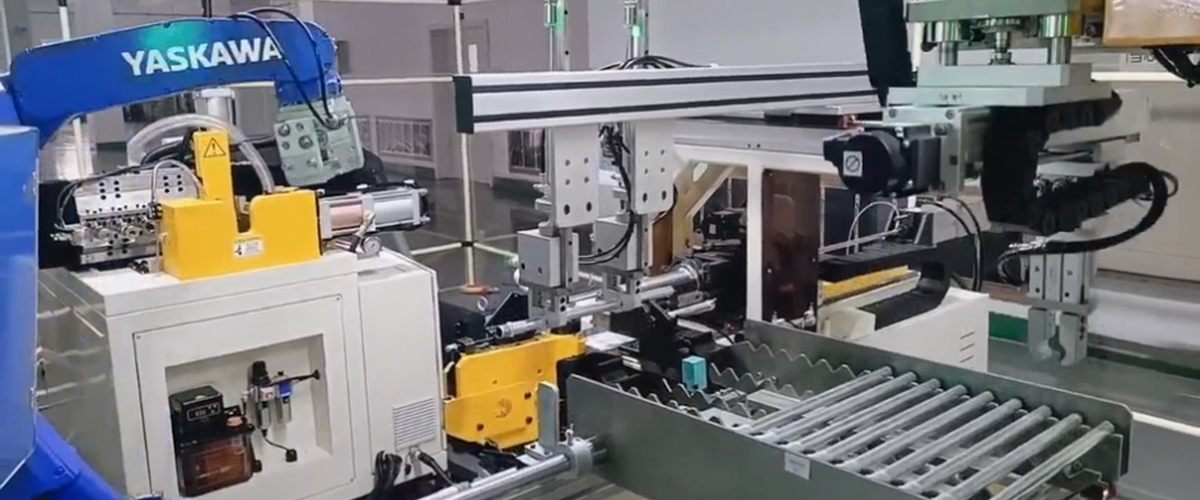
 Automated Line for End-to-End Tube Forming and AssemblyThis integrated line automates loading, deburring, simultaneous end forming, nut assembly, and inspection for tubes from 1,000 to 5,000 mm, ensuring consistent quality and reducing manual handling.View Product →
Shanghai Fubei designs the ATL molding automatic line with the same servo control and HMI philosophy used in its other tube processing equipment. The operator sets the program once, and the line switches between tube sizes using stored recipes. That allows the user to run a batch of brake tubes in the morning and a batch of air-conditioning pipes in the afternoon without re-tooling the whole line.
When purchasing an automatic line, the first question is not the price but the expected return. The ATL molding automatic line offers measurable gains in three areas: consistency, throughput, and labor cost.
Consistency comes from the deterministic cycle. In a manual cell, the operator might rotate a tube by 90 degrees with a slight offset. In the ATL line, a clamping fixture references the tube at a fixed point every time. Bending angles are controlled by servo-driven heads with closed-loop feedback, not by the operator's mood or fatigue.
Throughput improves because the line runs continuously. While one station is forming an end, the bending head can be moving to the next position. Overlapping motion means the cycle time is much shorter than the sum of individual station times.
Labor cost is lower because one operator can supervise the whole line instead of three or four people at separate machines. The operator’s job becomes loading raw material, monitoring the HMI, and handling occasional alarms, not performing repetitive manual work.
To give a concrete picture, consider two common scenarios when comparing an ATL molding automatic line with manual or semi-automatic approaches:
| Factor | Manual / Semi-Automatic Cell | ATL Molding Automatic Line |
|---|---|---|
| Cycle consistency | ±0.3 mm to ±0.8 mm depending on operator | ±0.1 mm or better with servo clamping |
| Changeover between tube sizes | 30–60 minutes with manual adjustments | 5–15 minutes using stored recipes |
| Operator headcount | 3–4 operators for equivalent output | 1 operator for line supervision |
| Scrap rate | 1–3% typical for small-batch work | 0.2–0.5% achievable with interlocking stations |
These figures represent typical industrial ranges and will vary based on actual tube material, wall thickness, and configuration. The key takeaway is that the automatic line does not add features for the sake of technology; it removes the variability that causes scrap and rework in manual cells.
The investment in an ATL molding automatic line pays back when the annual volume is high enough. A manual cell may be more cost-effective for a job shop that runs short batches of many different tube sizes. But for a plant that produces the same family of tube assemblies over a long season, the automatic line quickly overtakes the manual cell in total cost per part. That is why most ATL molding automatic line purchases come from high-volume automotive and HVAC component manufacturers.
Before selecting an ATL molding automatic line, a buyer should verify that the machine can handle their specific tube portfolio. The most important parameters are:
It is also worth asking about the line’s ability to integrate upstream and downstream equipment. For example, a CNC double-head pipe bending machine may be used in the same line for simultaneous bending of both ends, which is especially useful for U-shaped tubes in air-conditioning systems.
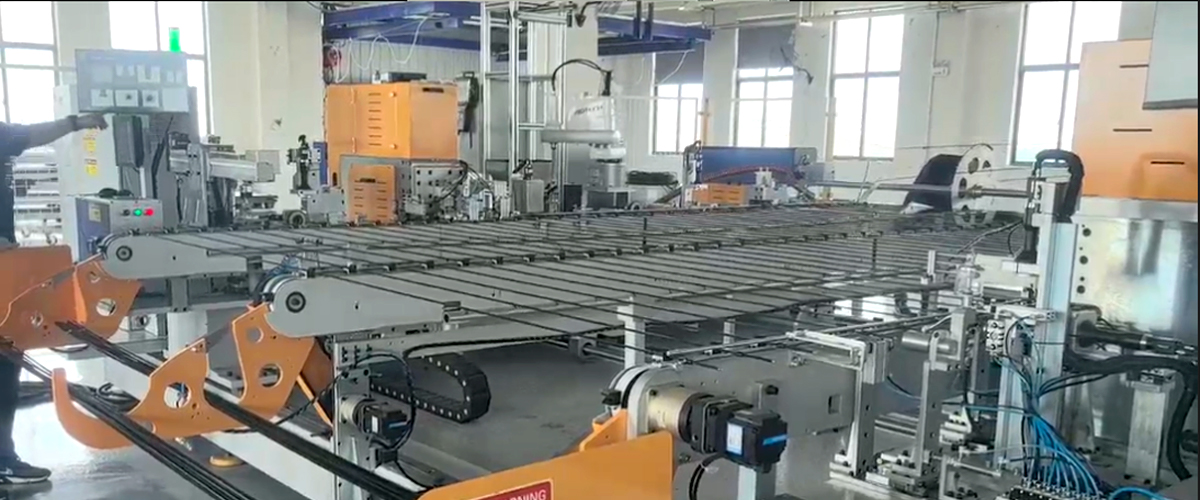
Dual-Head CNC Bender for Precise Hydraulic TubingA 15-axis servo-driven bender for tubes 4.76–6.35 mm OD, supporting bends up to 180° with automatic loading and unloading, ideal for brake and hydraulic lines requiring repeatable accuracy.View Product →
When evaluating a supplier, ask for a process capability study. The supplier should be able to show dimensional measurements taken over a production run, not just a sample of three parts. A reliable manufacturer will document the clamping strategy, bending spring-back compensation, and end-forming tool design.
One more practical recommendation: ask for a reference of the line running a similar tube material. If the manufacturer cannot provide a working installation with a similar outer diameter, wall thickness, and bend radius, that is a warning sign. The ATL molding automatic line can be tuned for a specific material, but that tuning is most reliable when the supplier has already done it for a comparable project.
Two industries drive most of the demand for ATL molding automatic lines: automotive and air-conditioning manufacturing. Within automotive, the most common uses are air-conditioning pipe assemblies and brake pipe assemblies.
Automotive air-conditioning pipes are usually made from aluminum alloy tubes with thin walls. They need clean end forms for O-ring connections and precise bends to route the tube through the vehicle’s interior cavity. An automatic production line design specifically for this application can include a leak test station after forming, so the line not only makes the tube but also verifies it before it leaves the automatic cell. Shanghai Fubei offers a dedicated automatic production line for automotive air-conditioning pipe forming that shares the same core components as the ATL molding automatic line but packages them for this specific use.
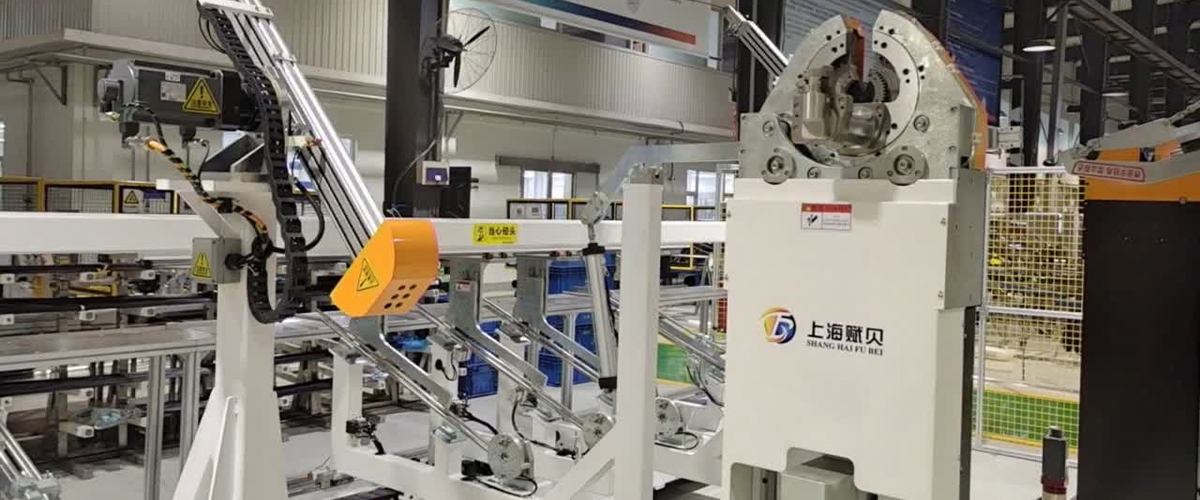
Flexible Automated Line for Asymmetric Pipe End FormingThis line performs distinct operations on each tube end, including forming, bending, and robotic transfer, suitable for air-conditioning pipes or brake lines with different connection requirements per side.View Product →
Brake tube production is a more demanding case. Brake lines carry critical safety functions, so dimensions must be held tightly and the tube surface must be free from scratches or dents. The ATL molding automatic line’s cleated feed and low-pressure gripping can be configured to avoid surface damage. The same line can handle the double-flare end forming required for brake connections.
In the air-conditioning industry, the line is often used for copper tubes used in condenser and evaporator coils. Here, the key concern is cleanliness and the prevention of copper chips inside the tube. The ATL molding automatic line’s enclosed forming area helps contain chips and dust, and it can be fitted with a vacuum chip extraction system.
Choosing the right automatic line is a long-term decision. The ATL molding automatic line from Shanghai Fubei is designed to be adaptable, and its performance depends heavily on specifying the correct stations, tooling, and control software for your tubing. If you are evaluating a line, start with your current tube drawings and production volume targets. Then discuss the cycle time, changeover capability, and quality assurance features with the manufacturer. For more information about Shanghai Fubei’s engineering approach and its experience in tube processing, visit our about page. It explains the company’s focus on servo-controlled equipment and custom solutions for automotive and HVAC sectors.

 [email protected]
 +86-021-57678482
 +86-18001603006
 Building A, No. 299 Tangming Road, Shihudang Industrial Zone, Songjiang District, Shanghai, China
Copyright © Shanghai Fubei Electromechanical Equipment Co., Ltd. All Rights Reserved Automated Pipe Processing Equipment Factory
